Trip Report: Marshall Islands
Visited in August 2025
This trip report is part of a four-part series. This is the third part and for a better understanding it is worth starting with the first article and going through the blog posts in chronological order.
Marshall Islands is a remote island nation in the central Pacific. The country consist of 29 atolls and over 1,000 small islands spread across a vast expanse of ocean, but offering only about 181 km² of land area. The capital is Majuro, which is also the largest island, surrounded by shallow coral reefs, lagoons, and palm trees.
The Marshall Islands, named after their British discoverer, have had an eventful history under German, Japanese, and US control before gaining independence in 1986. Today, they are a sovereign state with close ties to the US. The Marshall Islands are known for their turquoise lagoons, rich marine life, and traces of US nuclear testing in the post-war period.
So, how do get there? Once a week, Nauru Airlines connects Marshall Islands with Australia, Nauru and Kiribati. The Nauru Airlines flight departs every Friday from Brisbane via Nauru and Tarawa to Majuro (and then on to Pohnpei and Palau). Another alternative is the United Airlines Island Hopper, which flies four times a week between Honolulu and Guam, with a stopover in Majuro.
My flight landed on time at 9:20 am. Immigration took almost an hour, which was the longest compared to all the other islands I visited on this trip. While the Marshall Islands was visa-free for me, I learned from a group of Chinese tourists while waiting in line that they had to pay $600 for their visas. The Marshall Islands is one of the few countries that recognizes Taiwan and probably wants to keep Chinese visitors away…
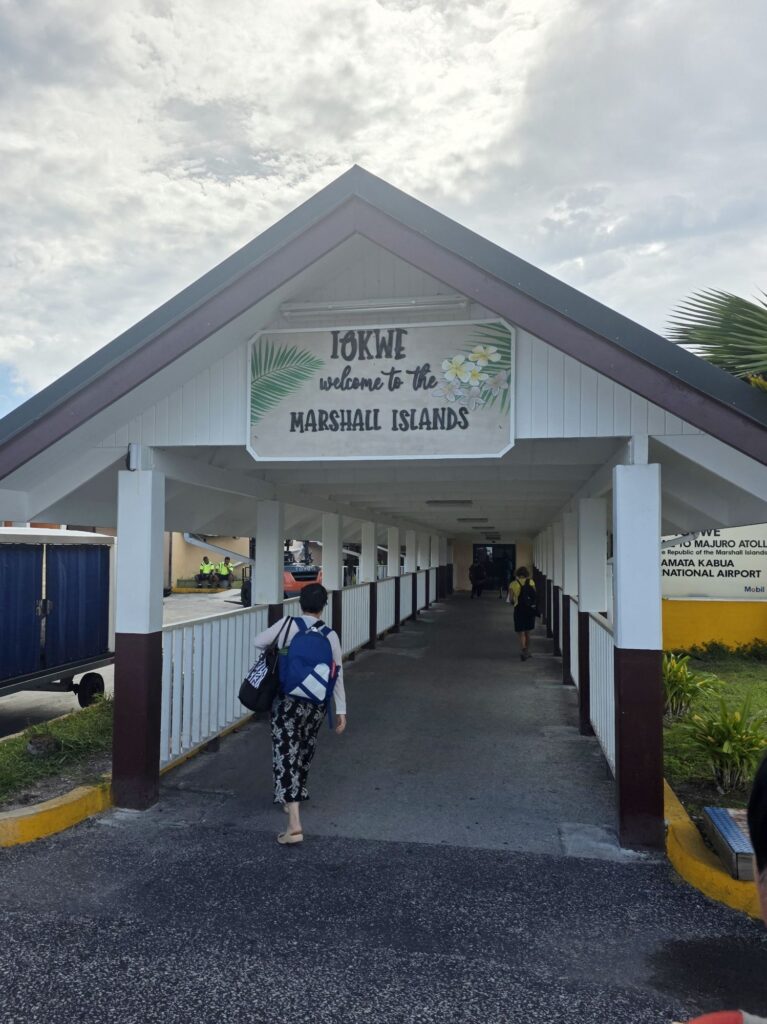
During the 30-minute drive from the airport to the city center of Majuro, the atoll actually looked quite beautiful. Green, above all. Lots of small houses with front yards. It looked like an American suburb and much nicer than Tarawa in Kiribati.
My hotel was the Robert Reimers. Most travelers choose between this accommodation and the Marshall Islands Resort. The Robert Reimers Hotel is owned by the Reimers family, which has become an influential dynasty throughout the country. Robert Reimers was half Marshallese and half German, who built a business empire in the country after World War II.
The hotel was a nice change from the spartan accommodations in Kiribati. A small but nice room with air conditioning, plus a pretty good restaurant. I was quite satisfied.
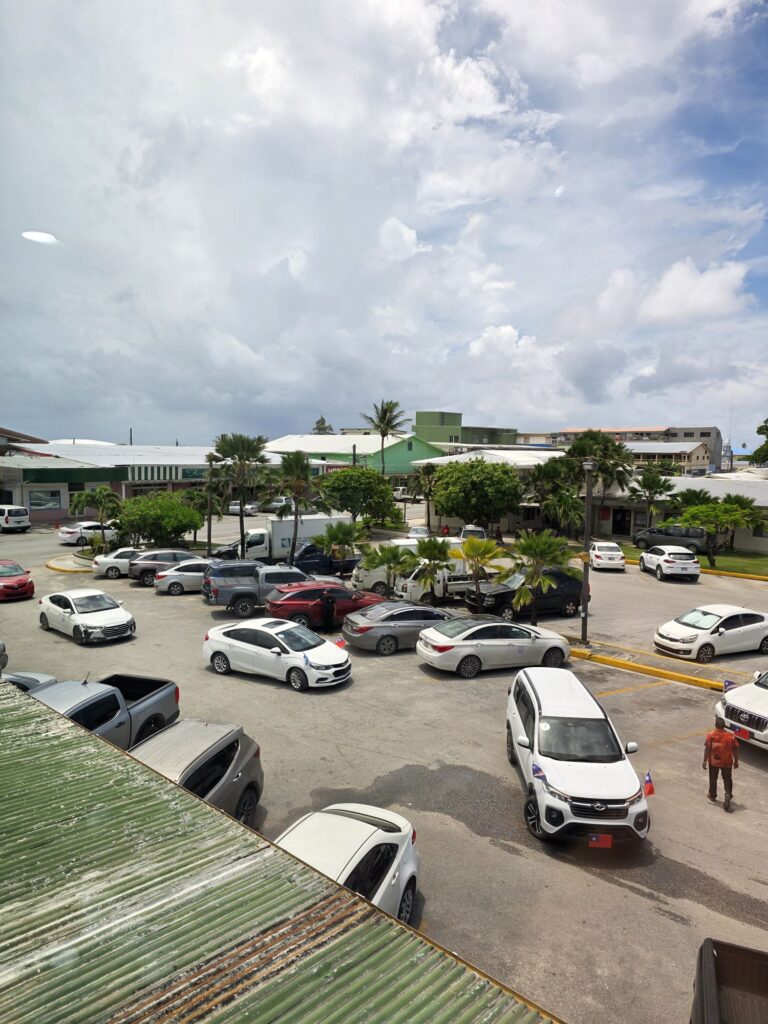
I still had the whole afternoon and the following day in Majuro. The Marshall Islands is a tiny country that doesn’t really take many days to explore. The Robert Reimers Hotel organizes trips to Eneko Island, another island on the atoll. The trip there only takes 30 minutes, so I would have liked to do it on the first day. However, I learned that these tours only take place three times a week. The next one was the following day.
So I used the remaining day to explore Majuro with two other travelers, Claudio and Paula from Portugal. For Claudio, it was country number 193. Many travelers you meet on these islands are here for the same reason: because they want to visit every country in the world.
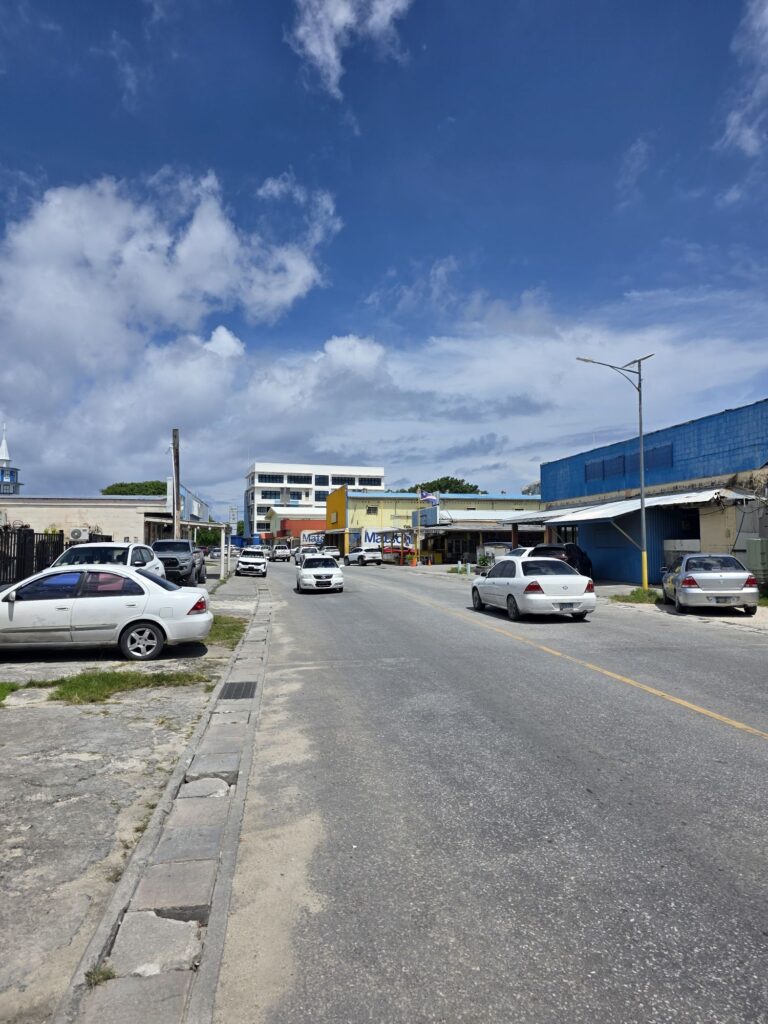
We walked from the Robert Reimers Hotel to the Marshall Islands Resort, which took about 45 minutes. Majuro basically has one main street that passes various shops and houses. The heat was brutal and there was little shade.
We stopped at one of Majuro’s few attractions, the Alele Museum. While there are some exhibits and collections on display here, such as traditional handicrafts and clothing, I wanted to go there mainly because of one specific topic: the US nuclear bomb tests from 1946 to 1958.
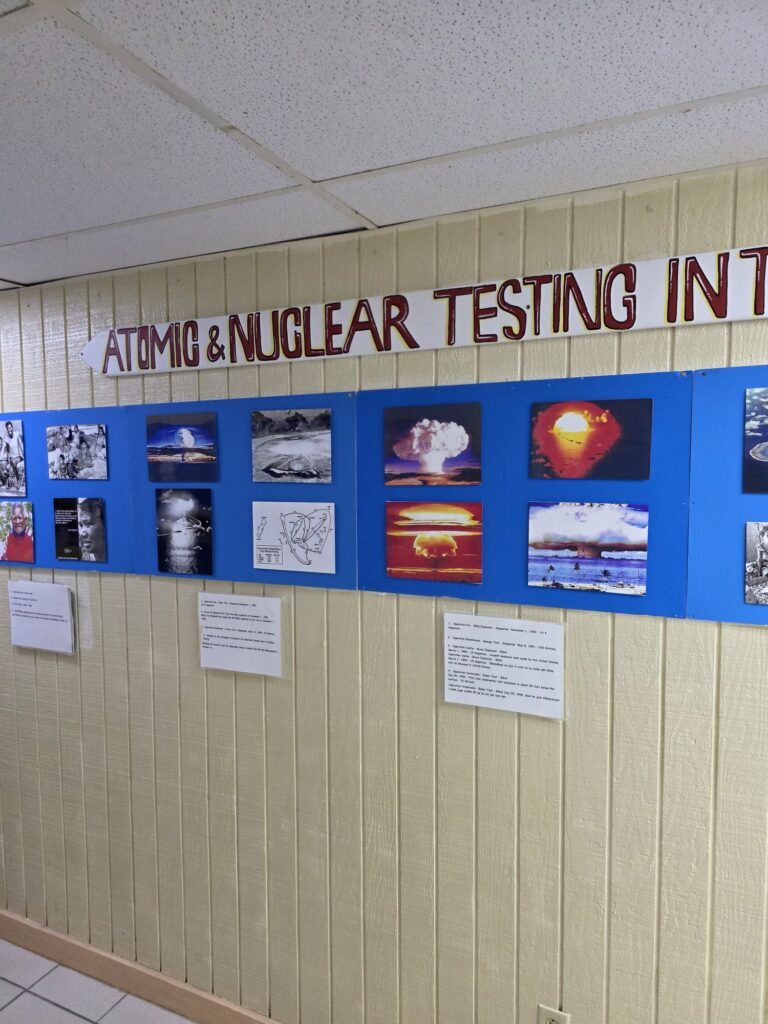
After World War II, the United States used the Marshall Islands as a remote test site for nuclear weapons. In 1946, Operation Crossroads began on Bikini Atoll, during which two bombs were detonated on decommissioned warships. The population was forcibly relocated beforehand.
In the 1950s, the US intensified its tests and carried out a total of 67 nuclear explosions. Particularly notorious is the 1954 Castle Bravo test on Bikini Atoll, in which a hydrogen bomb was detonated for the first time. The explosion was much stronger than expected (about 15 megatons of TNT) and produced massive radioactive fallout that also contaminated inhabited atolls such as Rongelap and Utirik. Many islanders were acutely irradiated and permanently evacuated.
While it could never be proven with 100% certainty, there is reason to suspect that the Americans knew that radioactive dust would affect the population and wanted to see what effect such an experiment would have. The nuclear tests devastated large parts of the Marshall Islands and had long-term health, environmental, and social consequences. Many resettlements became permanent, and radiation exposure led to cancer, miscarriages, and genetic damage. Even today, some atolls remain uninhabitable.
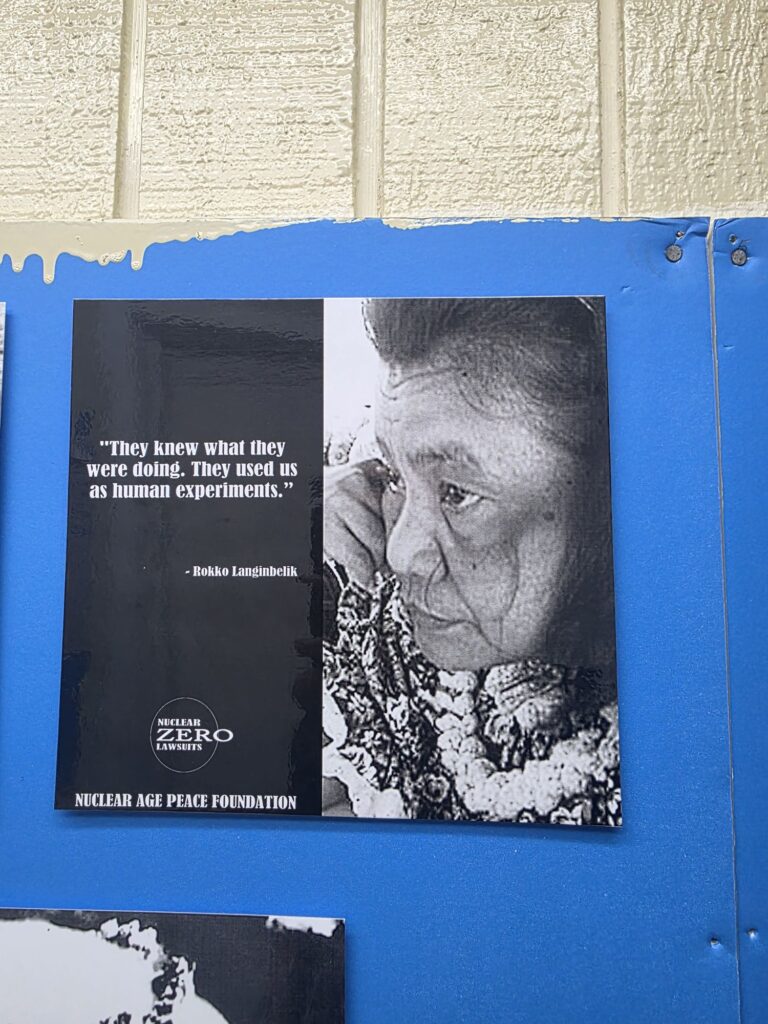
After the museum, we continued for about another 40 minutes to the Marshall Islands Resort, where Annie’s Bakery, a small, nice café with good coffee and pastries, is located right next door. After that, I took a taxi back to Robert Reimers. In Majuro, you pay a flat rate of $2 for each taxi ride. It’s relatively easy to find a taxi.
It was certainly not the most eventful day in Majuro, and I must say that the main street in the center did not look particularly interesting. The nice area with front gardens and lots of trees was mainly the first part from the airport towards the center. After that, everything around the main street looked relatively similar.
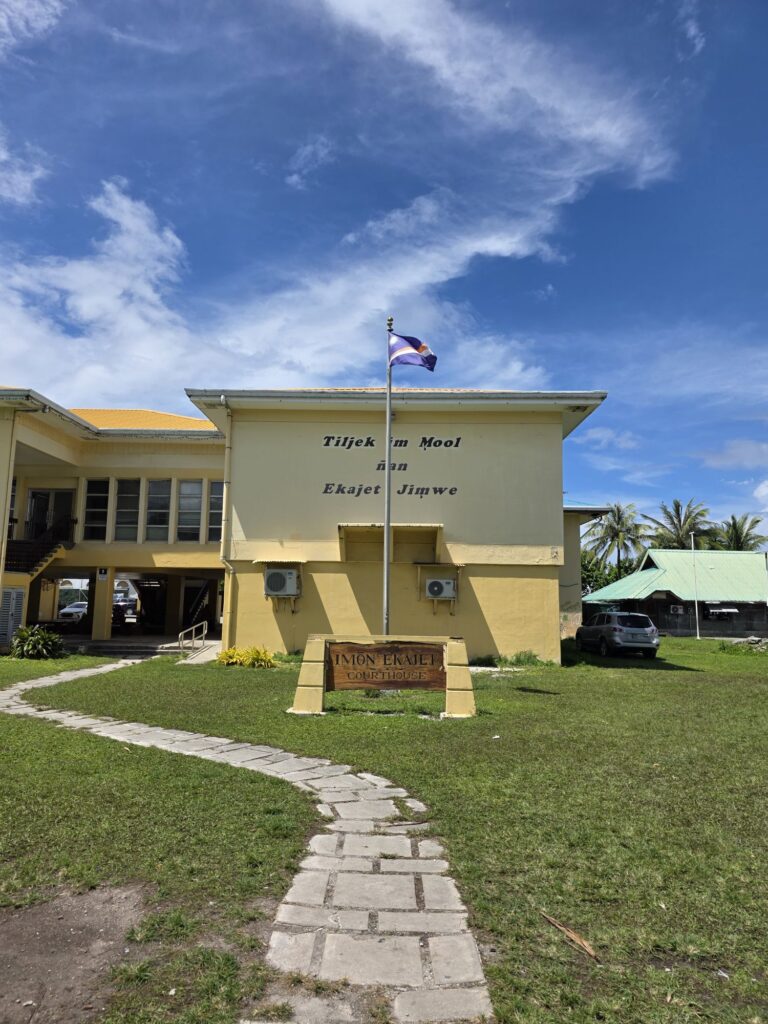
At the other end of the atoll would have been Laura Beach. But what put me off were some online reviews in which visitors wrote that they had to pay a $30 entrance fee. This entrance fee seems arbitrary to me, but since I had a beach day planned for the next day anyway, it wasn’t worth the hour-long drive there.
Incidentally, the Marshall Islands is a country where some travelers have had negative experiences with dogs. I have heard from people that they have even been bitten. Fortunately, we did not have any such incidents.
The next day, we took a trip to Eneko Island. The Reimers Hotel charges $40 per guest and their boat leaves Majuro several times a day (the boat leaves just two minutes from the hotel). There was a group of Americans on board with us who were there on business. They were teaching accounting here in the Marshall Islands and this was their day off. So not all foreigners in the Marshall Islands are country counters.
Eneko would be a beautiful island. Just not on this day. Because it rained practically non-stop. While the day before had been sunny and hot, i.e. the best conditions for such an excursion, the weather on the second day was simply terrible.
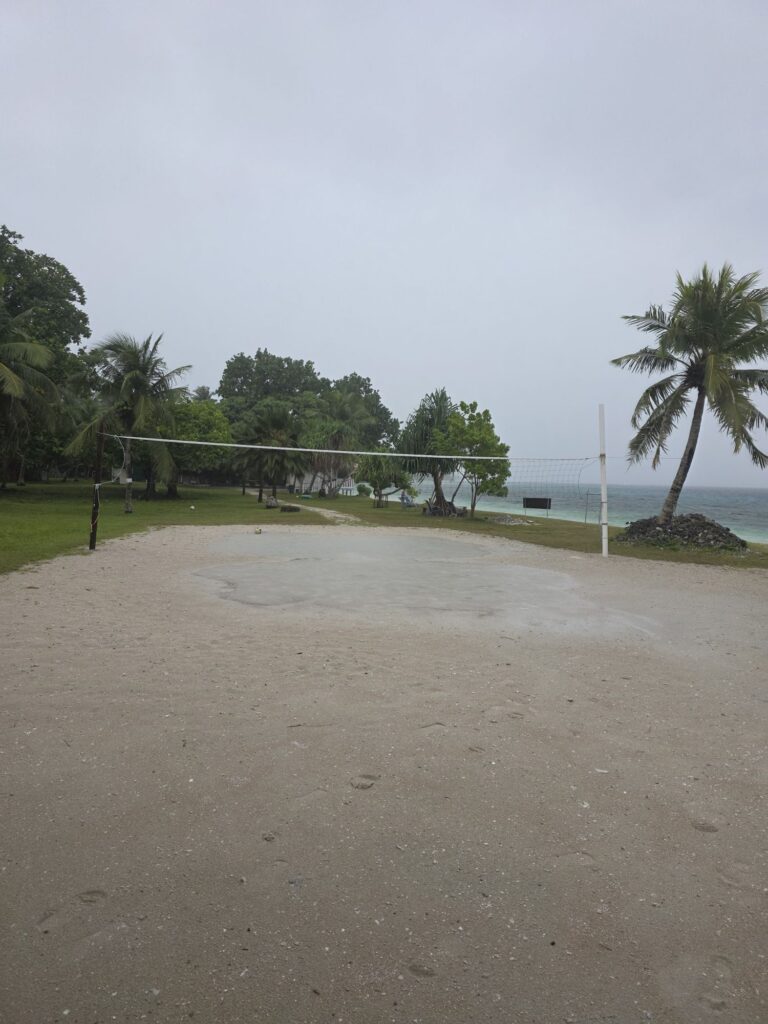
August is rainy season in the Central Pacific, including the Federated States of Micronesia and Guam, where I went after the Marshall Islands. So a day like this was a realistic risk. Unfortunately, the day of this island tour turned out to be the worst day of the whole trip.
What can you do on Eneko? I think most people come here to snorkel. Otherwise, you can just go swimming in the sea or explore the island on foot. On a sunny day, it’s definitely a great activity here in the Marshall Islands. By the way, Eneko has no restaurant, bar, or shop where you can buy food or drinks. So you have to bring your own provisions.
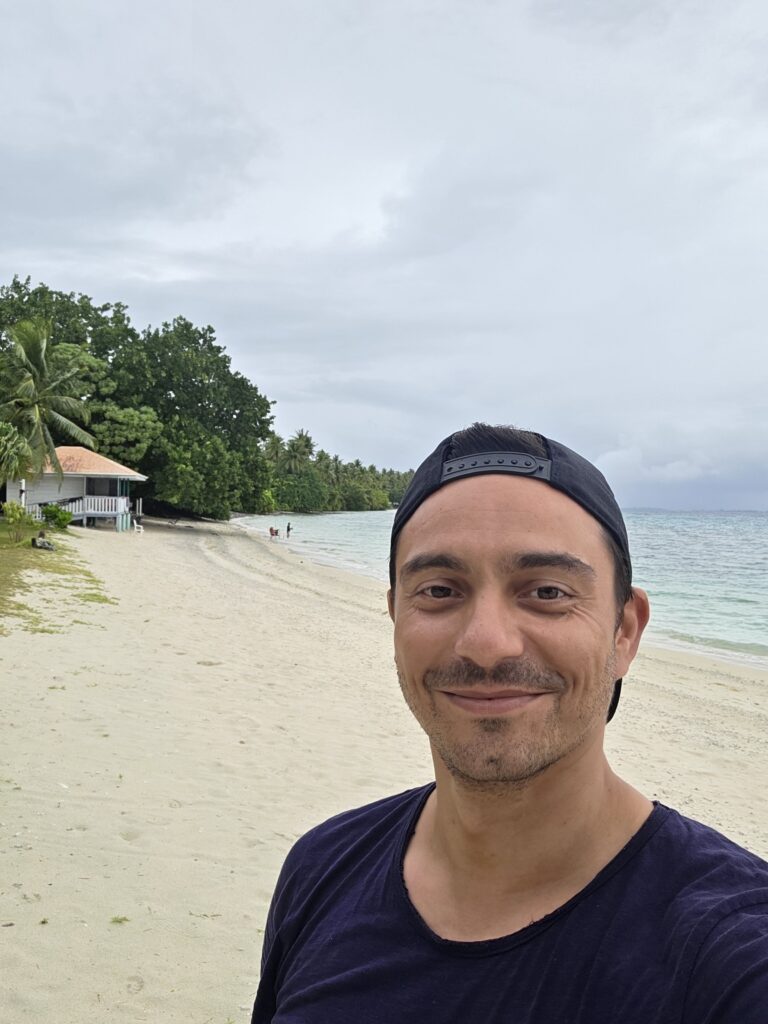
My trip ended after a few hours. Somehow, with the gray sky and the rain, it wasn’t really fun, so I took the boat back to Majuro at noon. This tour wasn’t a highlight, but neither would it have been if I had spent another full day in Majuro.
Another day trip you can do from Majuro is the Arno Atoll. The Reimers Hotel also organizes trips here. After that, you are slowly reaching the end of the activities in this country. Marshall Islands is not really a “touristy” country and,, as harsh as it may sound, definitely one of the less interesting countries in the Pacific.
My time in the Marshall Islands was over after two days. They were two quiet, uneventful days. I didn’t have a bad time, but I would be lying if I said that the country blew me away.
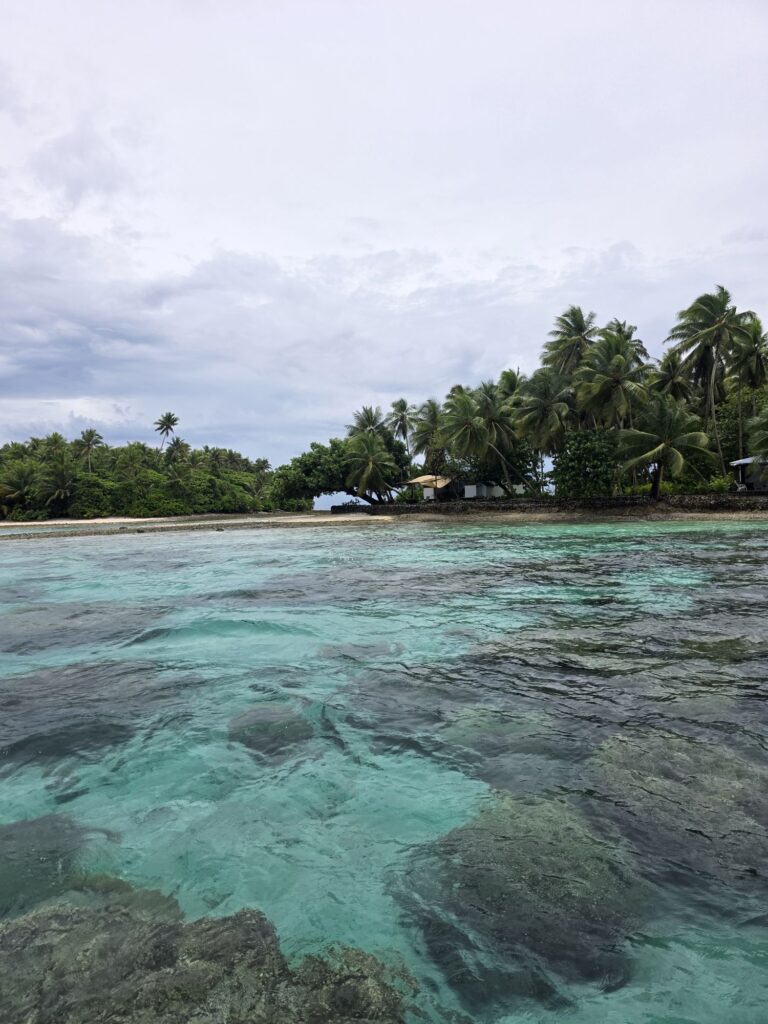
In my personal Pacific ranking, the Marshall Islands would occupy the bottom three spots along with Nauru and Tuvalu because there is simply too little for travelers to do here. Obviously, I don’t regret my visit, I never do. However, I wouldn’t recommend the Marshall Islands to anyone who doesn’t have the goal of visiting every country in the world.
At the airport, you pay a $25 departure fee (cash and card accepted). Then it was time to continue on the United Airlines Island Hopper, perhaps the most unique flight route in the world. The route runs between Honolulu (Hawaii) and Guam, with several stops on islands in the Marshall Islands and Micronesia. For many of these small islands, the Island Hopper is the only regular international air connection, making it a vital lifeline for people, mail, and goods.
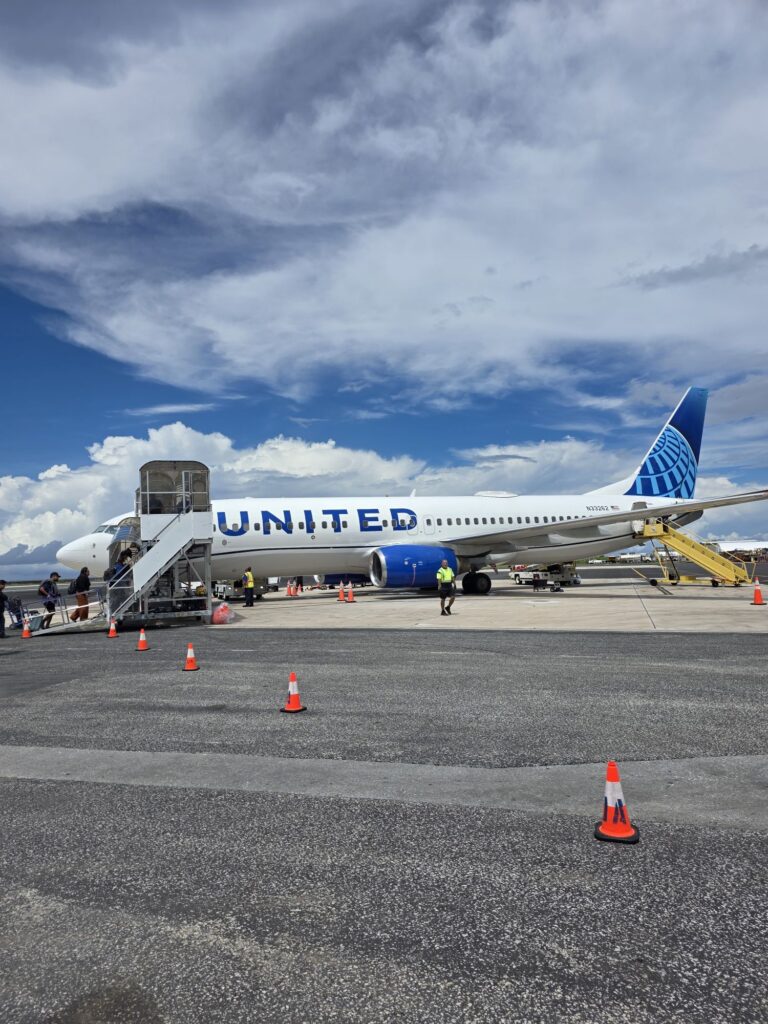
On its way, the flight typically stops in Majuro, Kwajalein, Kosrae, Pohnpei, and Chuuk. Passengers usually remain on board, but can use the brief layovers to take photos from the runway. The route is flown with a Boeing 737, suitable for the short runways. The entire journey takes about 14 hours, making this scheduled flight one of the longest daytime routes with multiple stops.
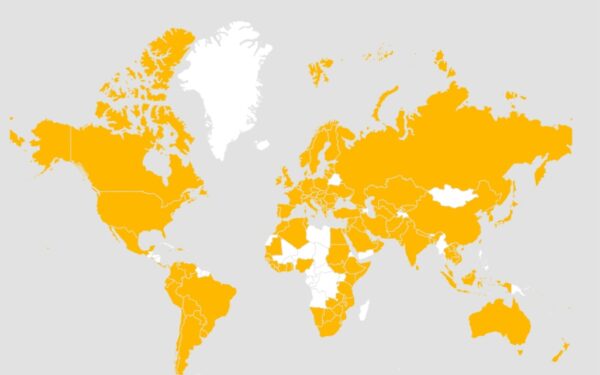
For me, the flight went directly from Majuro to Pohnpei, one of the four Federated States of Micronesia — my last country in Oceania and the second-to-last one in the world! Click here to read that trip report.
Click here to find the trip reports of all 197 countries I have visited!