Trip Report: Timor-Leste
Visited in August 2025
At the very edge of Asia lies a tiny country called Timor-Leste, also known as East Timor. It sits right next to Indonesia and just a stone’s throw away from Australia’s northern coast. Timor-Leste is Asia’s youngest nation. It only gained independence in 2002, after decades as a Portuguese colony and then years of brutal Indonesian occupation.
For me, Timor-Leste was the final country in Asia. Its remoteness was the reason I’d never managed to combine it with another trip over the past years. There are daily flights in and out of Dili, the capital, from Bali (Indonesia) and Darwin (Australia). More recently, there are also weekly connections from Singapore and Malaysia.
Timor-Leste is one of the least visited countries in the world. This is certainly due to the fact that many people (including you?) have never heard of this country. However, it is also due to the country’s poor flight connections and lack of tourism infrastructure. In addition, despite its current stability, the country still has a crisis image among those who heard about its struggle for independence.
My journey began in Bali, a place I actually never wanted to return to, but which is still the most convenient way to get to Timor-Leste. On a Sunday at noon I hopped on the 1.5-hour Citilink flight from Denpasar to Dili. For many nationalities, there’s a visa on arrival at the airport. For me it was even better – like most Europeans – I didn’t need any visa at all.
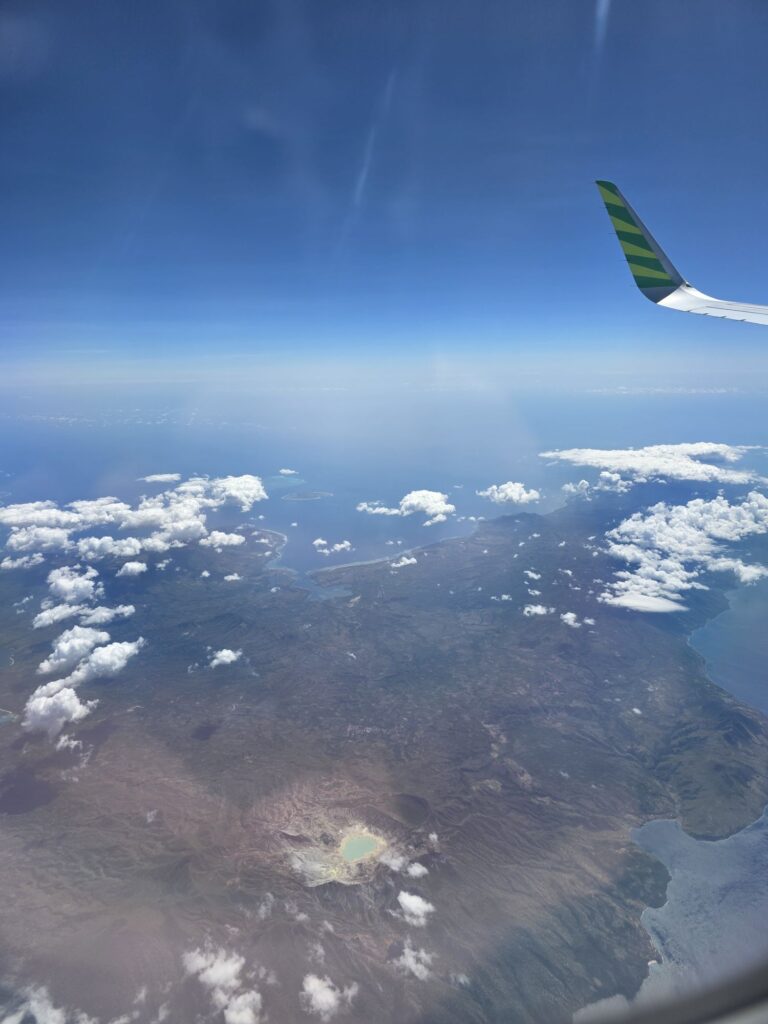
“Timor-Leste very hot,” said Antonio, my hotel driver, as a welcome. A spot-on observation that I couldn’t agree with more. It was about 32°C that day. Hot but bearable. Before heading off into town, I stopped at an ATM to get some cash (Timor-Leste is a cash country and it uses the USD as currency) and grabbed a SIM card. For just 6 bucks I got unlimited internet for 5 days
Timor-Leste is officially a Portuguese-speaking country, alongside the local language Tetum. That made communication with Antonio a bit tricky. Still, I managed to explain that I wanted to visit Atauro Island the next day, so he suggested we stop by the speedboat office on the way to my hotel. No luck though – it was closed on a Sunday afternoon. “Go tomorrow morning,” Antonio told me.
My hotel was the Sunset Inn, a social project that helps disadvantaged youth get a start in the hospitality industry. A really cool idea – and the young staff (all around 18–25 years old, I’d guess) did a fantastic job. The location was good, with many restaurants and shops nearby, the rooms basic but clean. Nothing to complain about.
To be honest, I didn’t arrive in Timor-Leste with huge expectations. I’d read more than once that traveling here could be challenging, with pretty much zero tourism infrastructure. And in my research I didn’t really come across anything that gave me a big “wow, I must see this” moment.
Don’t get me wrong – I didn’t expect Timor-Leste to be boring like Brunei – but I figured more than 2–3 days here wouldn’t be necessary. So I booked a short stay: two half-days and one full day. Enough to get a feel for Dili and the surroundings.
Online I found the contact of an English-speaking local student named Samuel, who had previously taken other travelers around Dili on his motorbike. The day before my arrival I messaged him to check if he was free, and he said yes. As for the price, he told me to just pay what I thought was fair. I settled on 10 USD per hour.
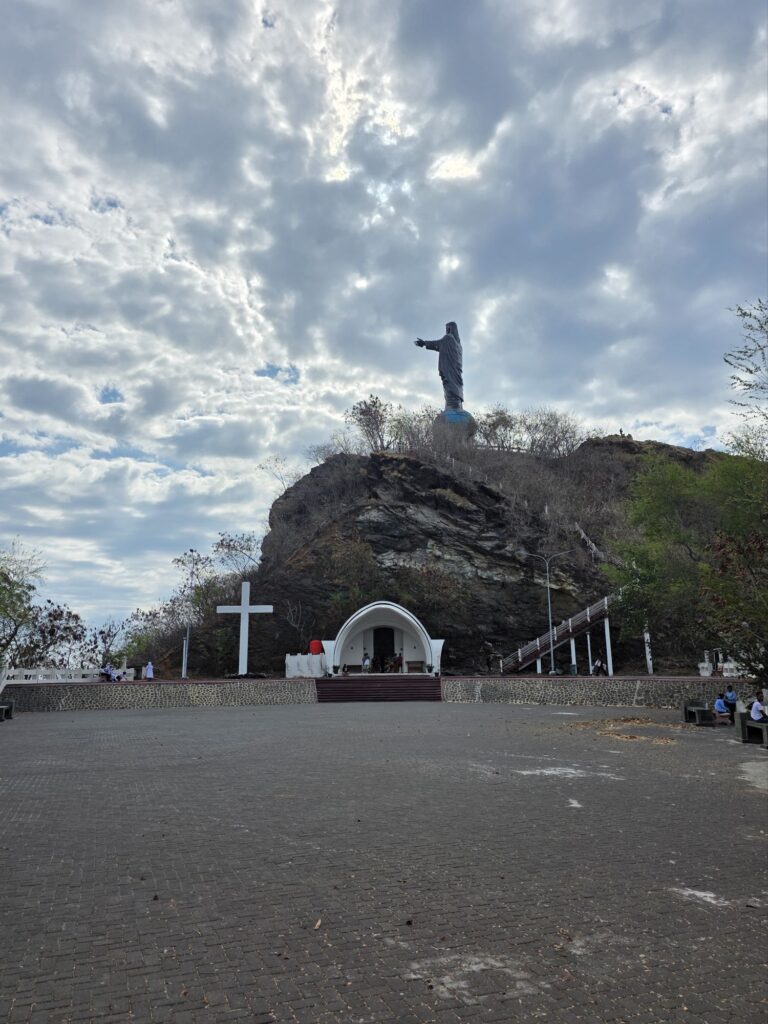
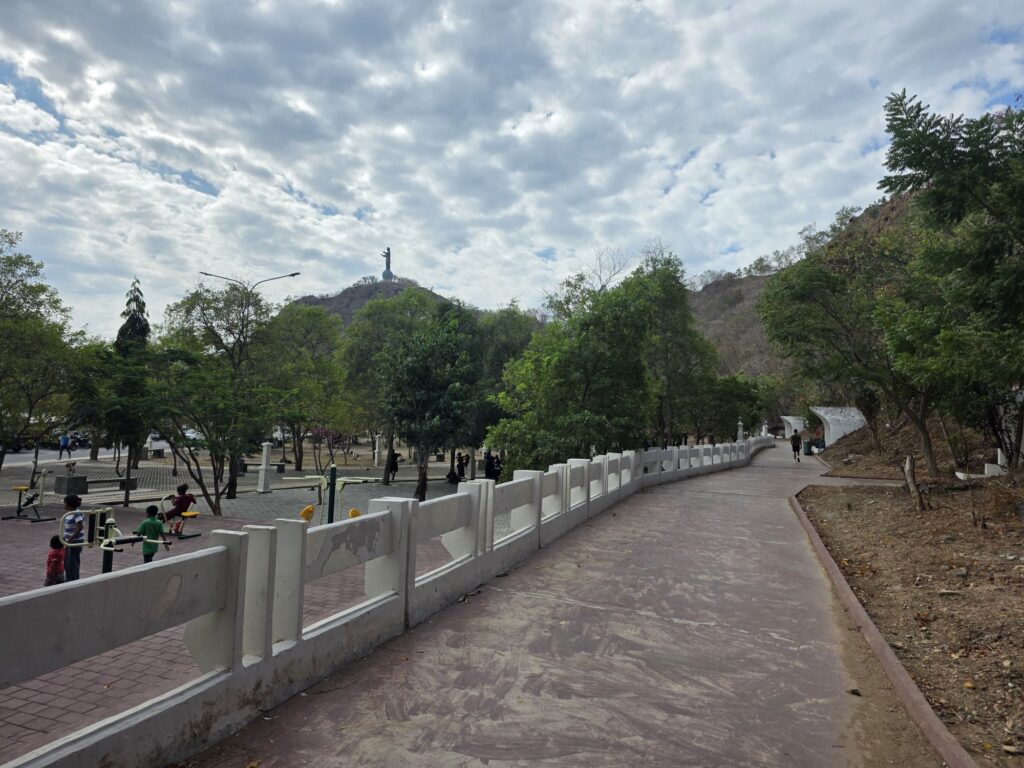
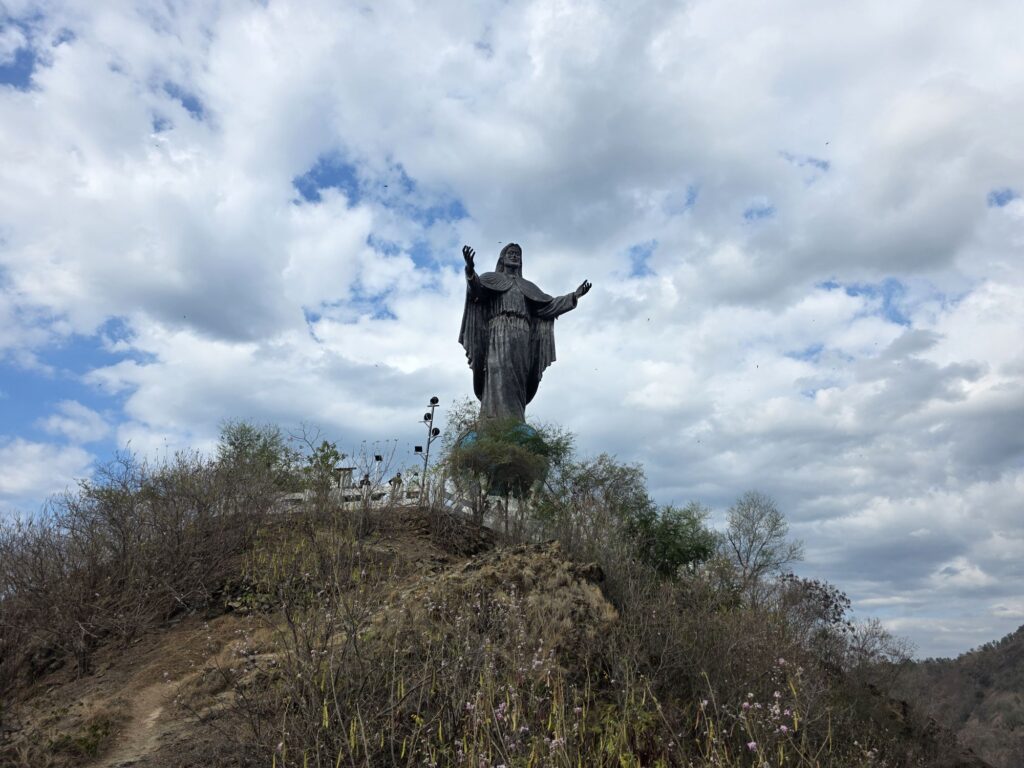
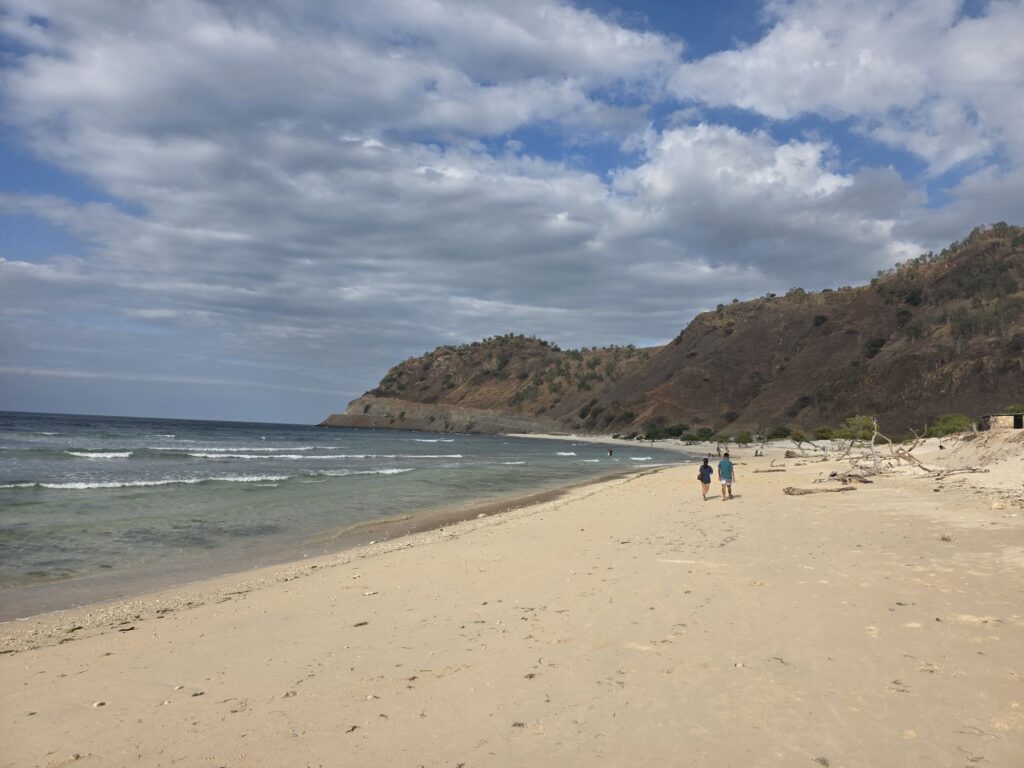
Our goal that first afternoon: the Cristo Rei statue, probably the most famous landmark in the country. It’s a 27-meter-high Jesus statue that sits on a hill overlooking Dili. Twenty minutes on the back of Samuel’s motorbike and we were there. Right below the Cristo Rei is the beach of the same name, where lots of locals were hanging out on this Sunday afternoon. The vibe was super chilled and relaxed.
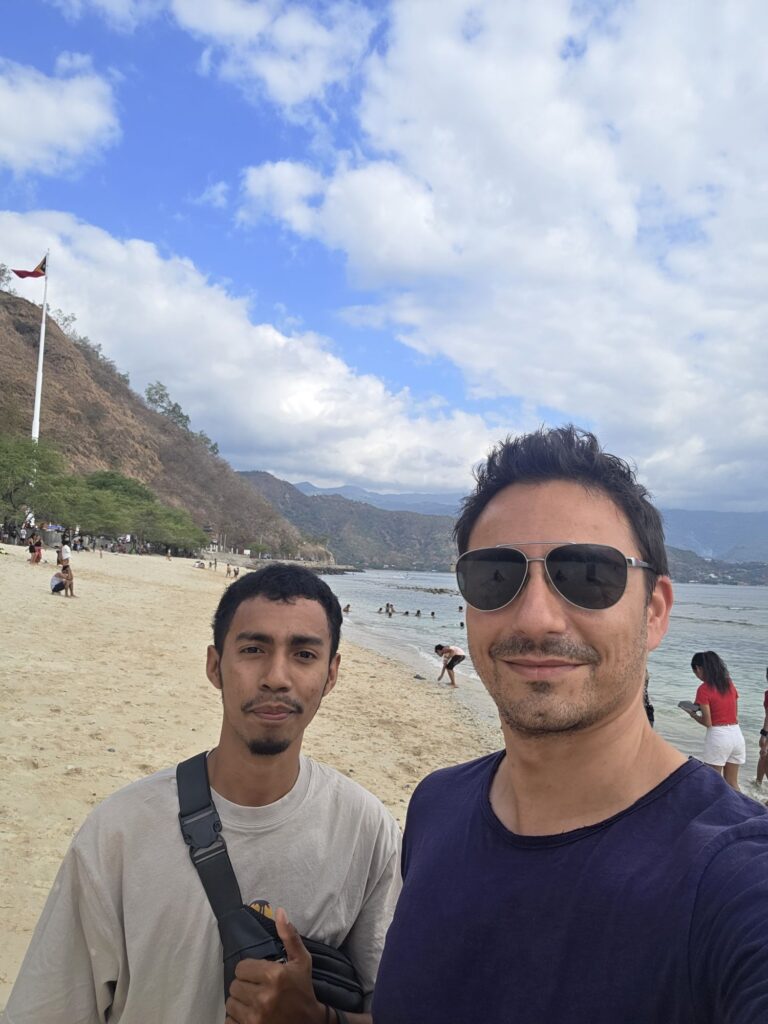
The statue itself was actually a gift from Indonesia back when they occupied Timor-Leste. The height – 27 meters – wasn’t random: it was meant to symbolize Indonesia’s 27 provinces at the time, with Timor-Leste as the 27th.
To reach the statue you have to hike up a few hundred steps. It takes about 20 minutes but it’s a fairly easy climb, so everyone should be able to do it. Along the way you pass 14 “stations of the cross”, which represent Jesus’ suffering. About 98% of Timor-Leste’s population is Catholic.
What really sets Timor-Leste apart, though, are the locals – incredibly friendly and curious about visitors. On the way up we met plenty of people who wanted to chat or take a photo with me. That friendliness doesn’t surprise me. Often in places with so few tourists, locals are especially welcoming. I noticed this throughout my stay.
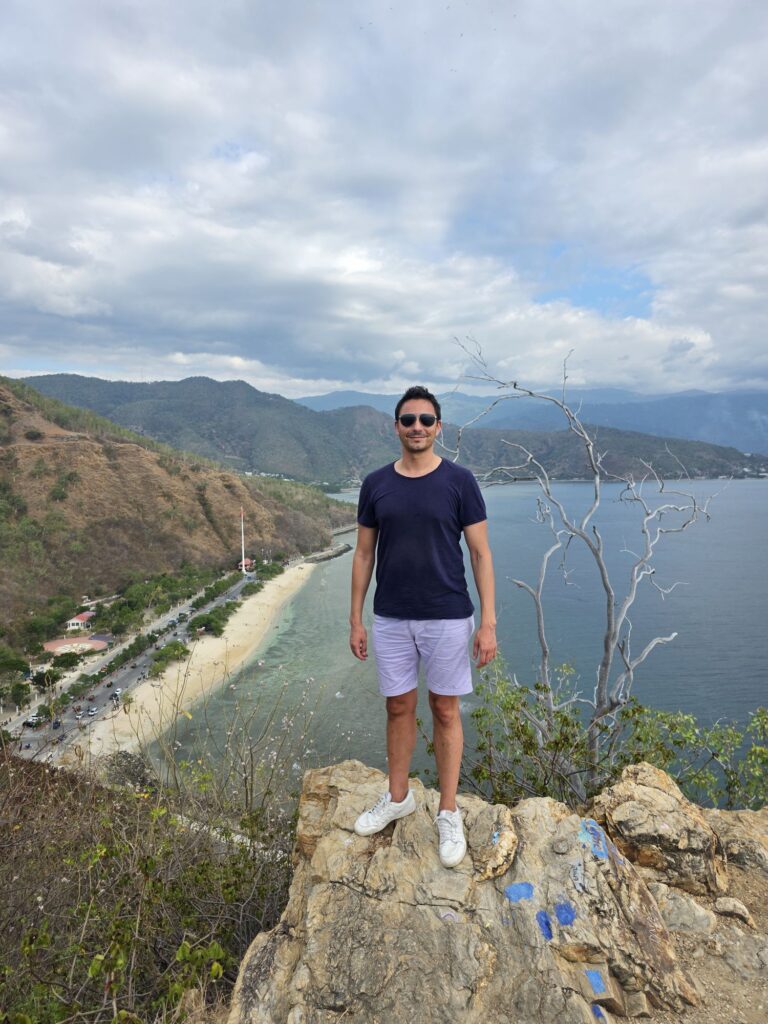
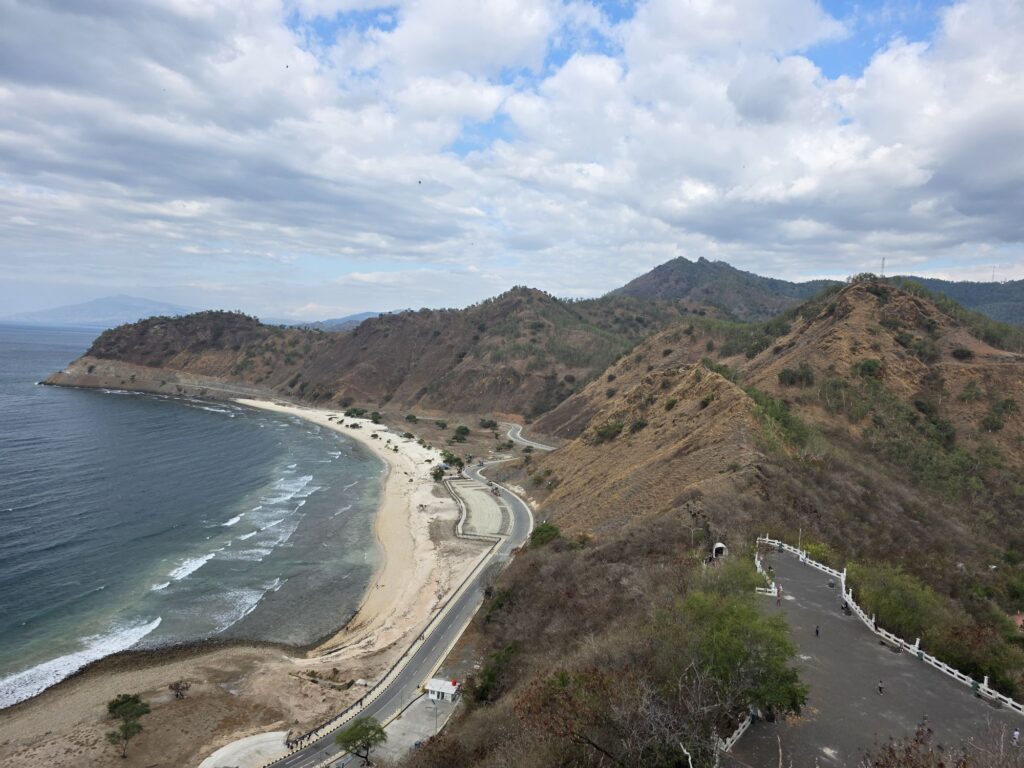
The hike to Cristo Rei is worth it not just for the statue, but also for the views. From the top you can see Cristo Rei Beach on one side and another stretch of coastline on the other. Definitely the best sight in Dili, and a must-do if you visit.
The next morning, waking up at 6 am was tough with my jet lag. Flying from West to East is always a pain, and I actually got from Europe to Timor-Leste in about 36 hours. However, I needed to be at the harbor by 7 to catch my boat to Atauro. Sadly, that plan ended an hour later when I stood in front of a locked gate.
Turns out, the speedboats don’t run every day. There’s always some way to reach the island, but with fishing boats taking up to three hours, it just wasn’t worth it for a day trip. Was I angry? Not really. Atauro looks beautiful in photos, but I knew I’d be seeing plenty of tropical islands later on this trip anyway.
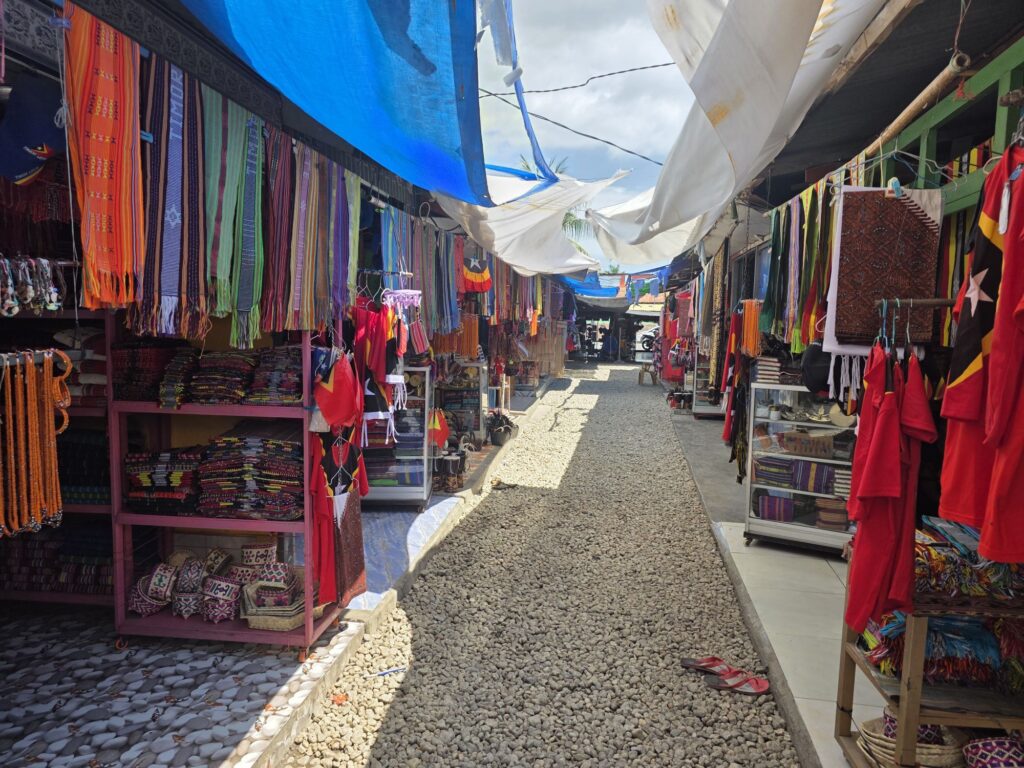
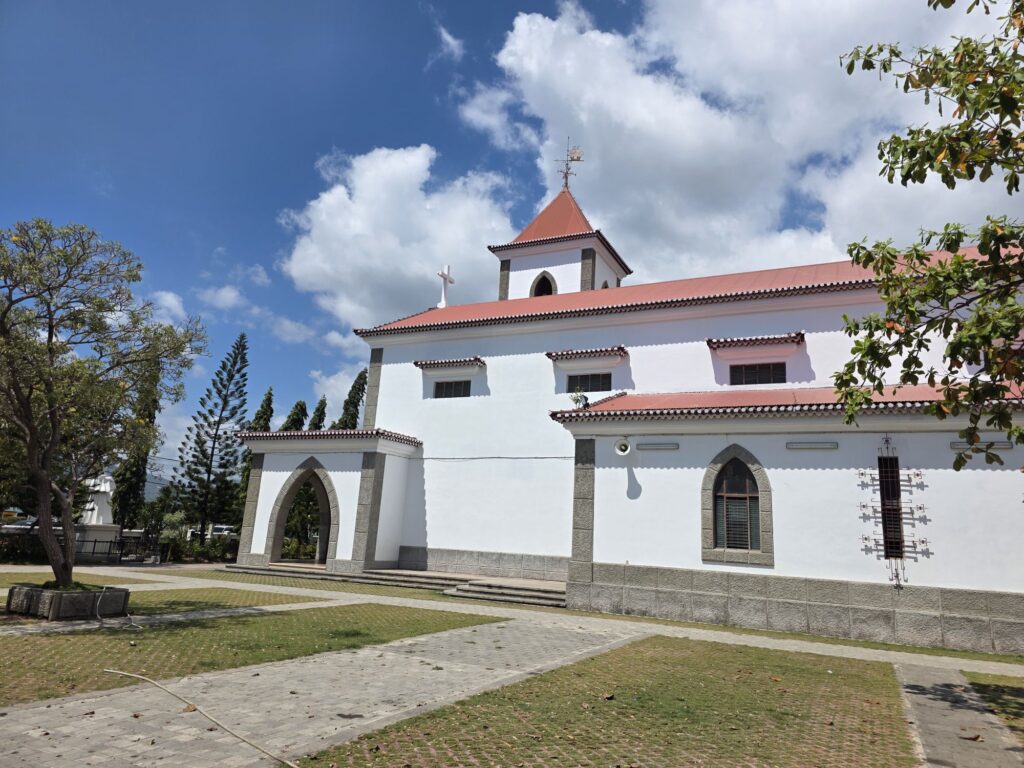
Instead, I spent the day checking out the rest of Dili’s sights, e.g. the Church of St. Anthony of Motael or the Tais market. Honestly, nothing there will make your jaw drop. Apart from Cristo Rei, the capital doesn’t have any world-class sights.
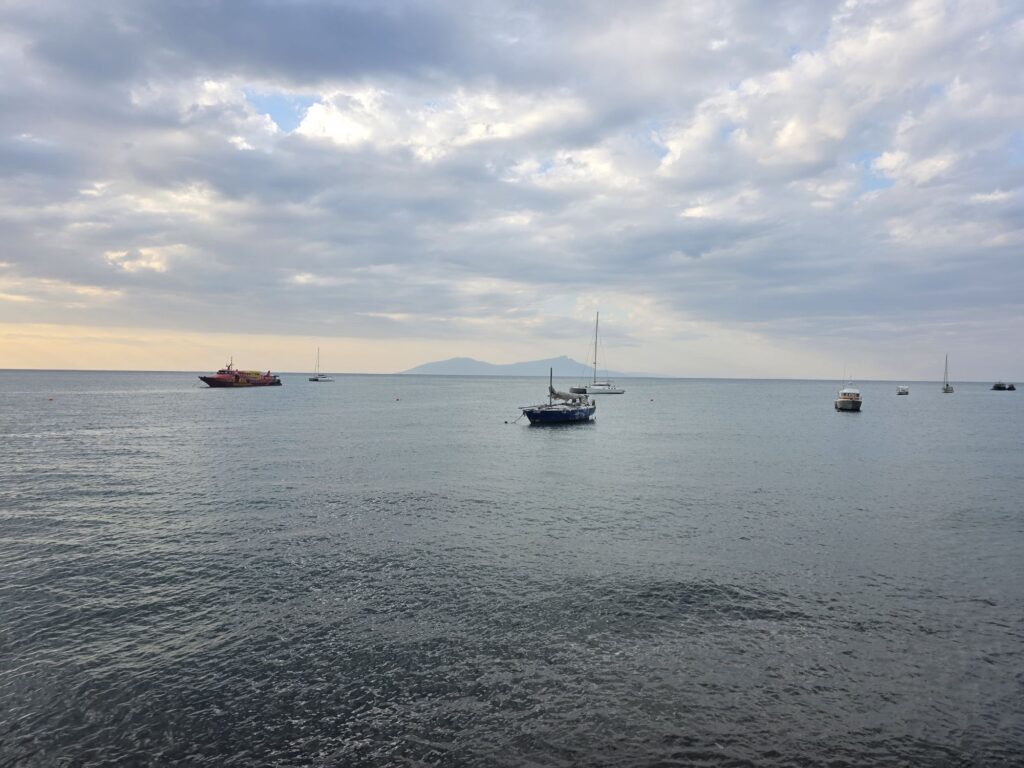
However, I was able to gather further impressions of Dili. Even if Dili doesn’t necessarily score points for its sights, it is still an interesting city to visit for a day or two. The city feels lively and colorful, with brightly painted houses, bustling markets, and scattered colonial buildings, while fishing boats bob in the bay.
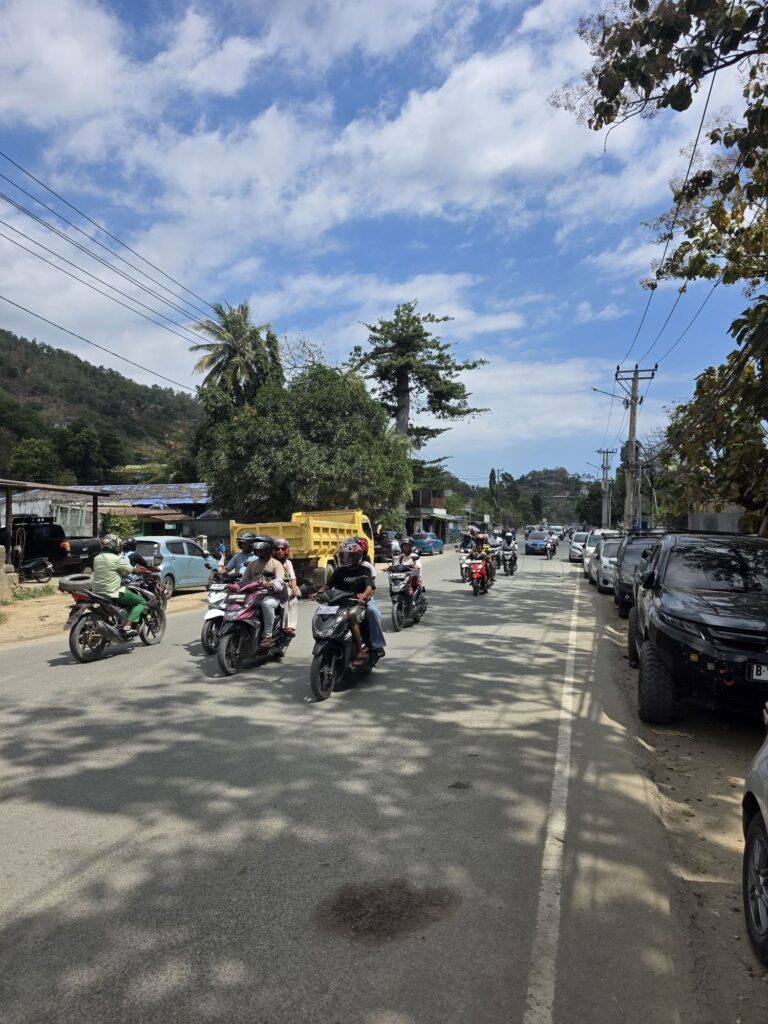
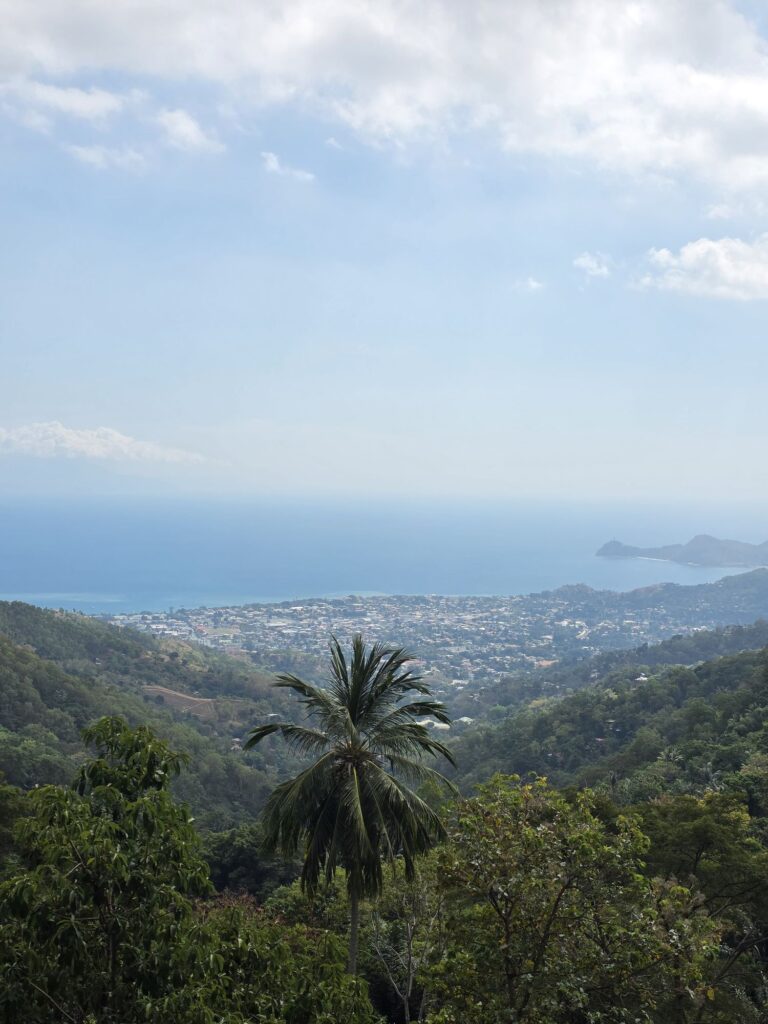
We also drove out of the city to see some of Timor-Leste’s countryside. Samuel did take me out to Dare, a small village about 20–25 minutes inland. The drive from Dili to Dare winds its way up the hills, past narrow roads lined with tropical vegetation, small houses, and views of the sea below. The higher you climb, the more the view opens up over the city and the bay, while the air becomes noticeably fresher and the surroundings greener.
Dare is home to a small museum about the Japanese occupation of Timor-Leste during World War II. Yes, the poor Timorese not only endured Portuguese and Indonesian rule, but also a period of Japanese occupation. The museum itself is tiny – maybe 15 minutes to read the displays – but the highlight is definitely the sweeping views. Plus, they serve good coffee.
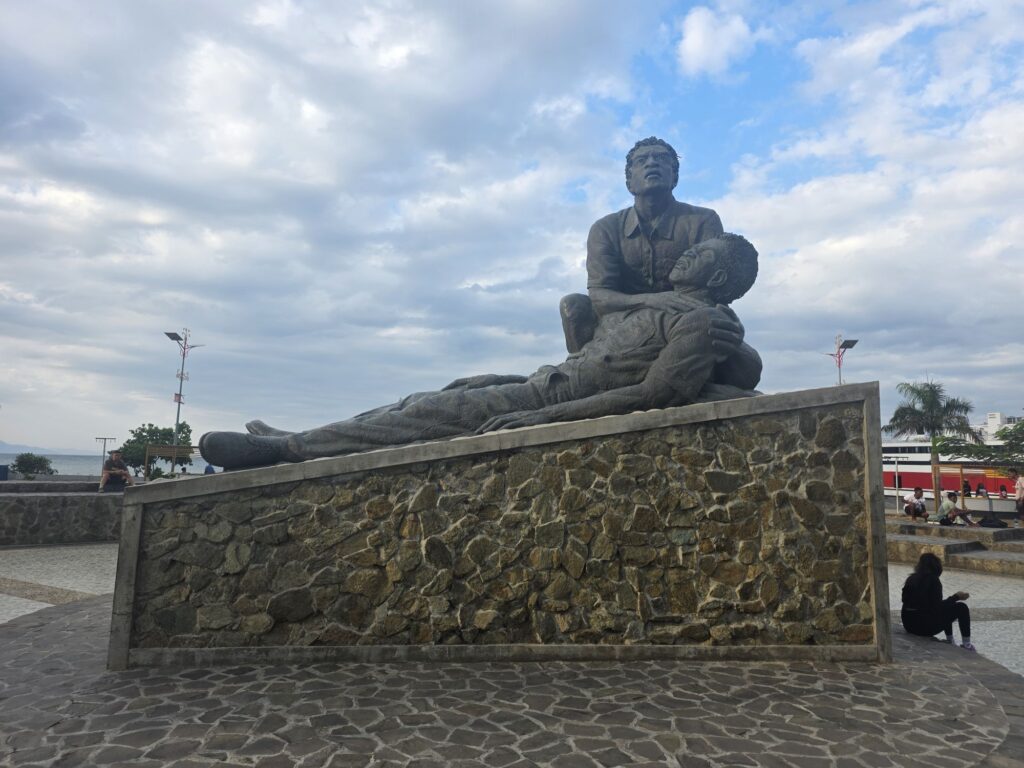
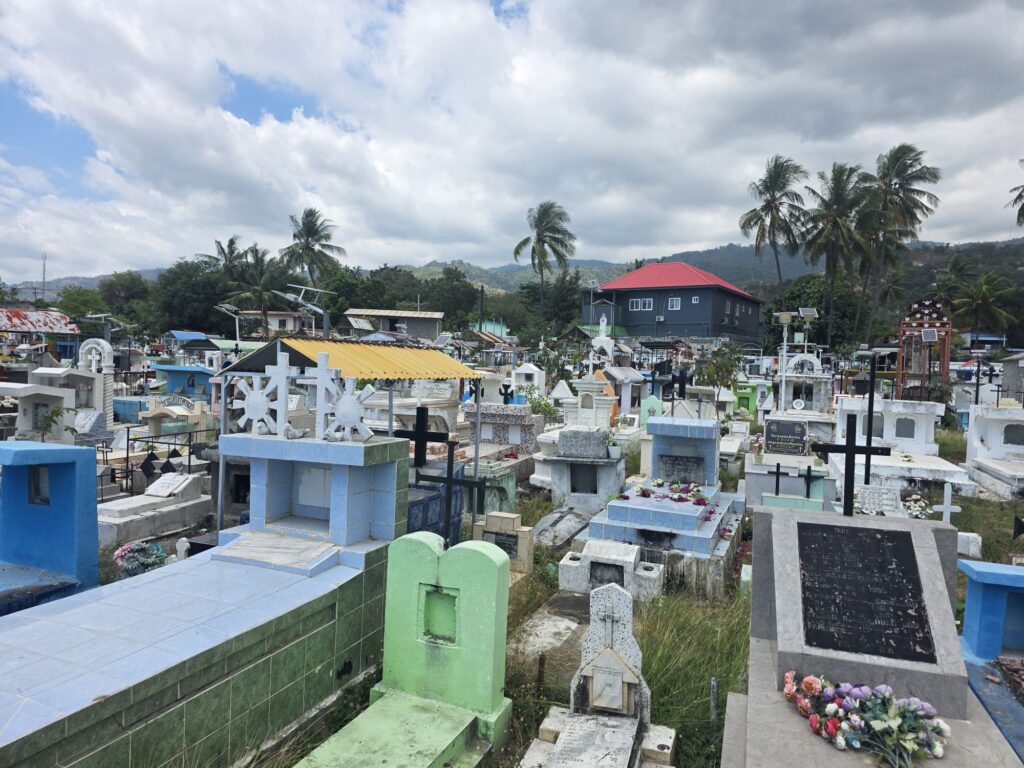
On the way back we stopped at Chega, a memorial for victims of Indonesian crimes during their brutal occupation, right next to the Santa Cruz cemetery, where many of those victims are buried. Both places are great to learn about the Indonesian occupation from 1976 to 2002.
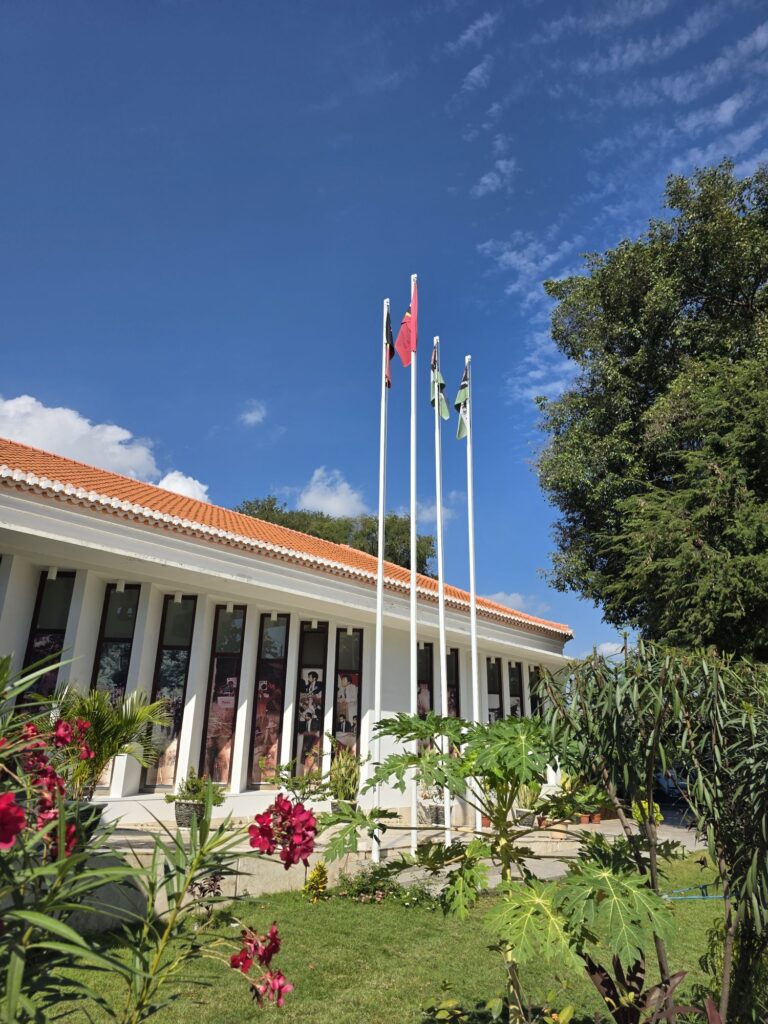
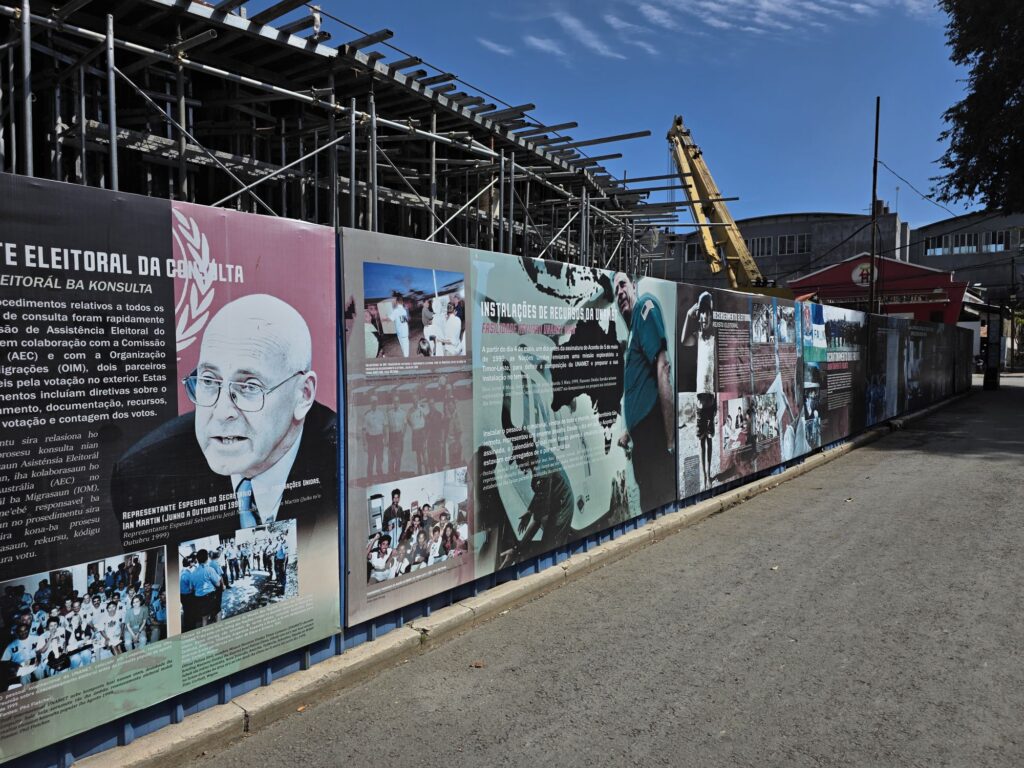
So how did the Indonesian occupation come about? That was something I wanted to dive deeper into on my third and last day, when I visited the Timorese Resistance Museum in Dili.
To sum it up quickly: in 1975, when Portugal’s dictatorship fell, the new government wanted to prepare its colonies for independence. But the process was chaotic, and Timor-Leste wasn’t ready or organized for self-rule. Internal conflict broke out, and when one party declared independence later that year, Portugal (already pulling out) didn’t really recognize it.
Indonesia then used the power vacuum and invaded just nine days later. The West – especially the US – quietly accepted the annexation. Why? Because the US had just gotten out of Vietnam and saw Indonesia as the most important non-communist country in Southeast Asia – not one they wanted to upset.
What followed was a brutal regime that cost the lives of 100,000 to 200,000 Timorese – about a quarter of the population at the time. Only in the 1990s did international pressure mount, and in 2002 Timor-Leste finally achieved its long-awaited independence.
The museum is a solid place to learn about this history. If you’re interested in the topic, don’t skip it. I’d recommend planning about two hours there.
Later that day, I left Timor-Leste on the daily flight to Darwin, where my final Pacific adventure was to begin. During my brief stay in Timor-Leste, I didn’t get a comprehensive impression of the country, but I did get a good first impression.
As already mentioned, Timor-Leste is one of the least visited countries in the world. Tourism is therefore still in its infancy. Nevertheless, I found that traveling around Dili was actually quite straightforward – despite missing out on the trip to Atauro. I was also fortunate with Samuel, who proved to be a stroke of luck (WhatsApp: +670 7738 9261).
Timor-Leste is not a particularly large country. The drive from the westernmost to the easternmost tip takes about 7.5 hours by car. From north to south, it takes around 3.5 hours. It is therefore a compact country where you can see a lot in a short time.
Of all the places I missed, Jaco Island, in the far east, would have interested me the most. The island looks gorgeous. Water in various shades of blue and turquoise, white beaches and everything probably almost completely untouched. If you have time, you should check it out.
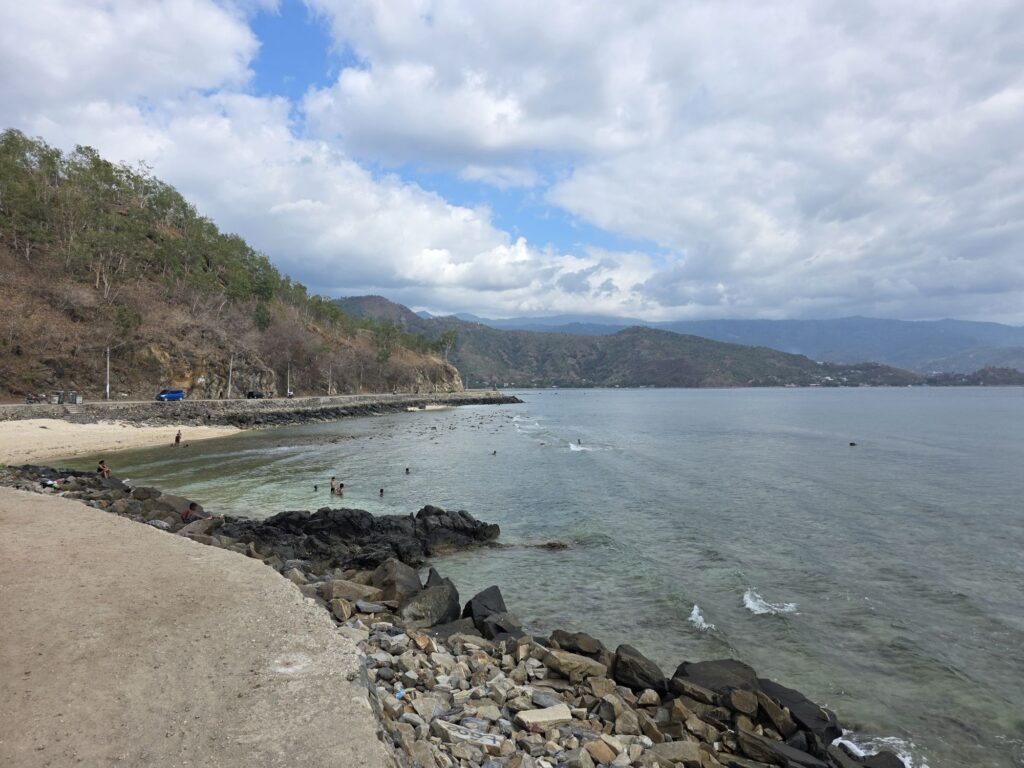
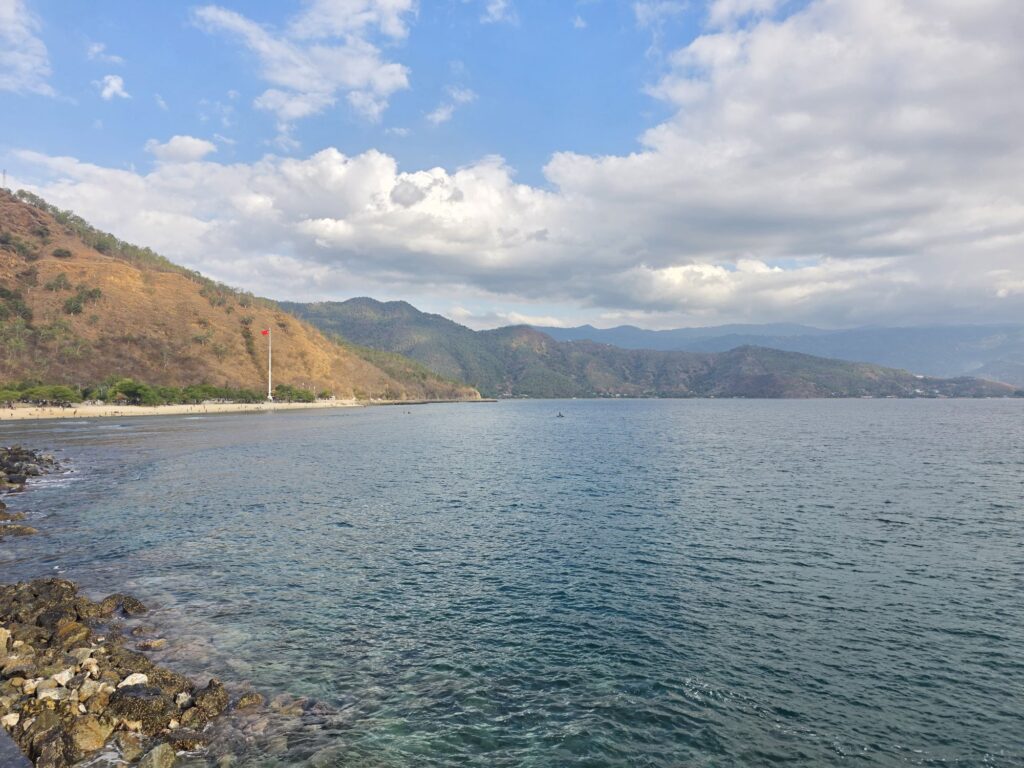
Otherwise, I have to admit that what I saw of Timor-Leste around Dili was beautiful. Don’t forget that the country is located in Southeast Asia, so you can expect tropical landscapes with palm trees, beaches, cliffs, and green mountains.
Timor-Leste was also reasonably priced. Not dirt cheap like other countries in Southeast Asia, but to give you a rough idea: I paid $81 per night for my hotel. A main course in the top-rated restaurants (I always go to these) cost around $10-15. Even a beer or coffee costs no more than $1-3. So all in all, not super cheap, but still affordable, I would say.
And while we’re on the subject of restaurants, the Sunset Inn’s own restaurant was excellent. The Agora Food Studio at the Timor Plaza mall was also absolutely top-notch. You should definitely try it!
In the end, I had three pleasant and enjoyable days in my last country in Asia. Timor-Leste may not have been the grand finale with spectacular fireworks, but the country’s location on the edge of the Asian continent and the fact that it is Asia’s youngest nation made it a worthy end to my time in Asia.
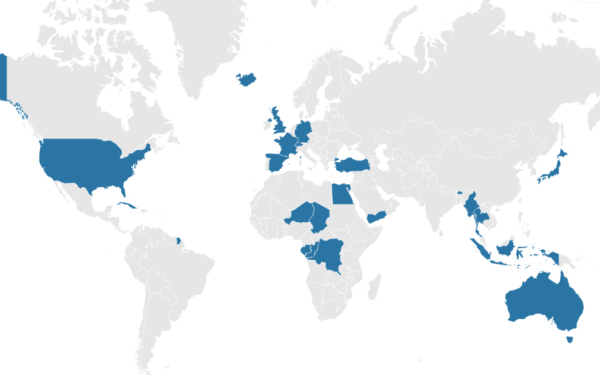
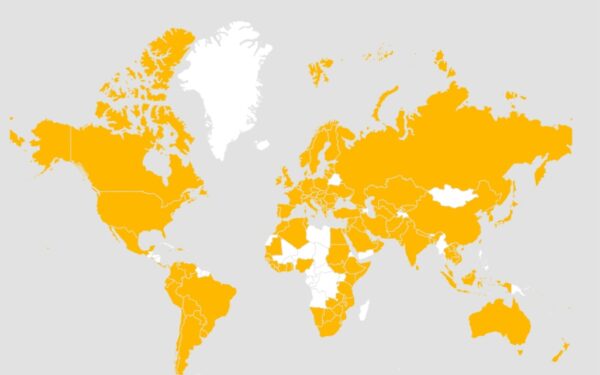
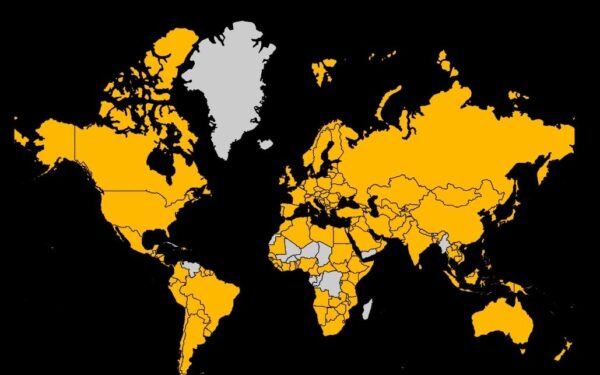
Click here to find the trip reports of all 197 countries I have visited!
I’m so happy to see you finished Asia (and now we know exactly where your final destination will be).
I’m sad that you missed Atauro Island which, for me, was the highlight of my trip to Timor-Leste in 2014. My guesthouse was run by an Aussie-Timorese bartender who made the best cocktails I’ve had anywhere in the world (sadly, it was a cash-only bar so I could only have two). I think we had the same impression of Timor….Hot, hard to get to but with good food and enough quirky sights to keep things interesting.
Congratulations! I’m planning to hit Countries #104/105 before the end of the year.