Trip Report: Laos
Visited in September 2012/2026
In 2012, Laos was considered a hidden gem in Southeast Asia. The country only opened up to tourism shortly before the turn of the millennium, so tourism slowly gained momentum in the new millennium.
The emphasis is here on slowly. Laos is the only landlocked country in Southeast Asia and, sandwiched between two heavyweights in the region – Thailand and Vietnam – as well as Cambodia, Myanmar, and China, the country was something of an outsider in terms of tourism.
When I first visited Laos in 2012, travel books often described it as “Thailand as it was 20 years ago.” In other words, it was still relatively untouched by tourism, which made for a genuine, authentic travel experience. In essence, this hasn’t changed much in 2026. Laos has not caught up with Thailand or Vietnam in terms of tourism and still enjoys a reputation as a hidden gem.
Admittedly, it is no longer a secret in the classic sense as it was in 2012, as it is much better known than it was then. However, it is still considered a very affordable destination without mass tourism, yet with a high experiential value. In addition, Laos only has flight connections to 3-4 neighboring countries. It obviously remains a landlocked country, which continues to shape its tourism profile
After visiting my final country in 2025 and completing my 197 project, Laos was my first major trip. Why Laos? To be honest, it could have been any other country, but I wanted to return to a country I hadn’t been to in a long time to see how it had changed over the years.
I also wanted to experience some new things that I didn’t do on my first trip. For this reason, I traveled in a rather unconventional way. I drove from Bangkok overland with a private driver to the south of Laos. The pure driving time was about 11 hours and took two days with a stop in Thailand’s Isaan region.
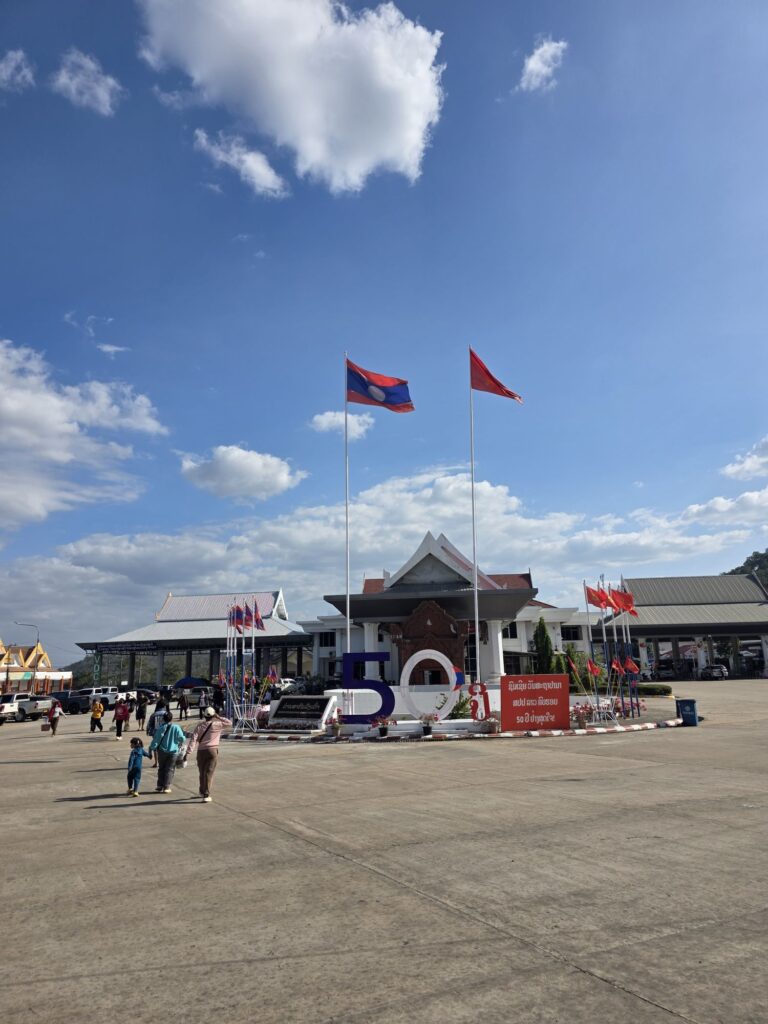
I have crossed several land borders in recent years. For me, this is still the purest way to enter a country. You arrive somewhere in the middle of nowhere, have your travel documents stamped, and then literally walk over the border. It’s a different feeling than when you leave an airport…
In the past, however, such land border crossings often proved to be nothing more than a stress test. Especially in Africa. So it was all the more gratifying that crossing the border between Thailand and Laos was one of the most pleasant experiences I’ve ever had. The people were more than friendly and the whole procedure took only a few minutes.
As a small bonus, Swiss citizens can visit Laos visa-free for 14 days – alongside Luxembourg, the only other European country to offer this. Other Europeans usually get a VOA or can apply for the e-visa.
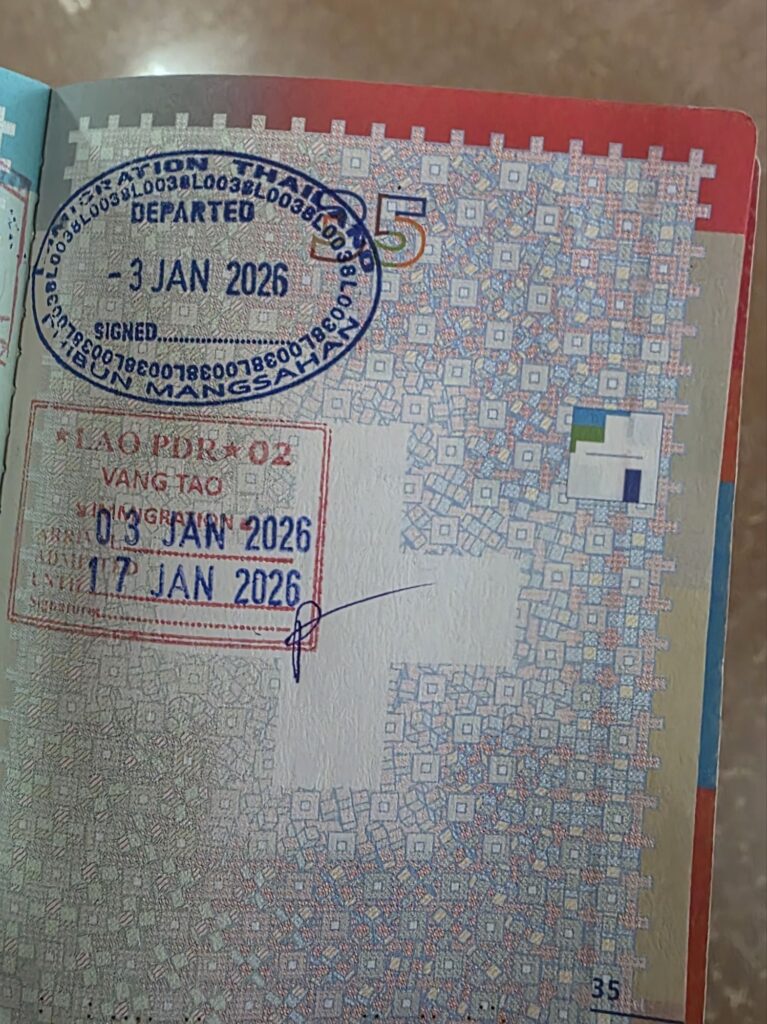
From the border to the final destination, Pakse, the third-largest city in Laos, the journey takes just under an hour. All the Thai drivers I asked told me that they cannot take their cars into Laos, so they would only drive us (there were two of us) to the border and we would have to take a taxi from there.
I was curious to see how easy this would be in practice. Whether there would be any taxis at all, and what prices they would charge. Some taxi drivers already approached us on the Thai side and then accompanied us as we crossed the border.
I expected tough negotiations, but when they asked for 1,000 baht for the 1-hour drive, we agreed without further discussion. An hour’s drive for a little more than €25 seemed okay, even though I’m sure it could have been cheaper. Especially after we realized in the next few days how extremely cheap Laos still is.
In 2012, I traveled the classic route that practically all travelers in Laos choose: Vientiane – Vang Vieng – Luang Prabang. Either in this direction or vice versa. Since all these places are quite close to each other, you can get the most out of your trip in a short amount of time.
This time, however, the south was first on the agenda. It is not in the immediate vicinity of the other three places mentioned. An overland trip takes over twelve hours, so it is more practical to take a flight. For this reason, most people tend to skip this destination.
Pakse
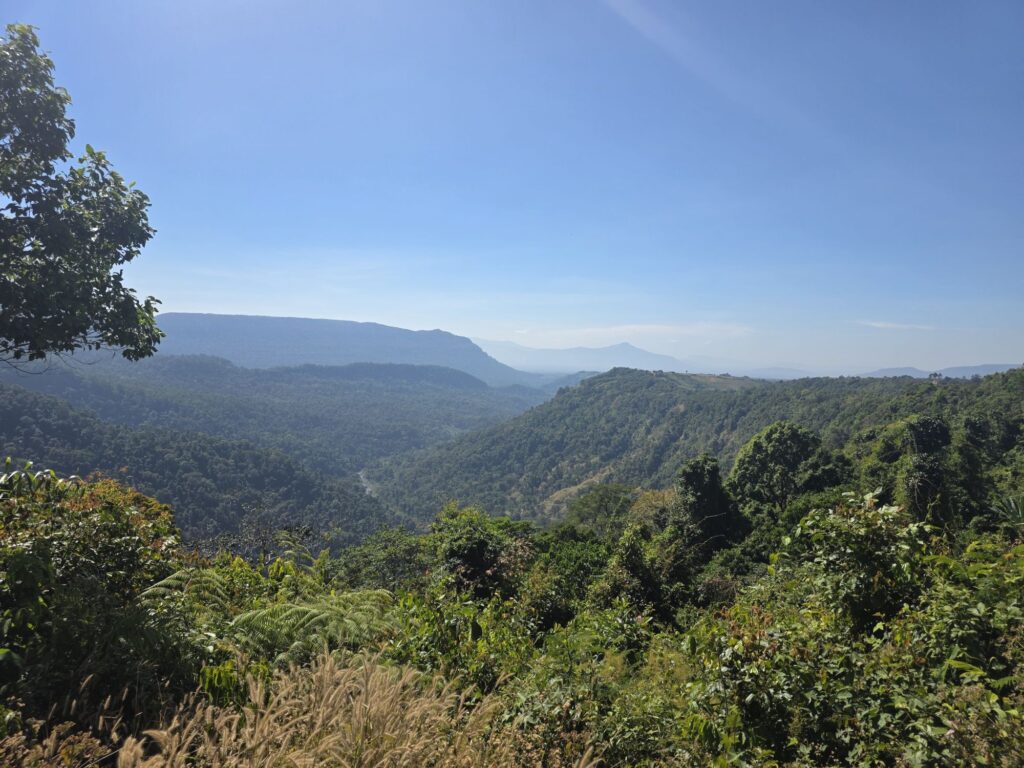
Pakse is a relaxed provincial town where the Mekong and Xe Don rivers converge. The main reason for our visit was the surrounding nature. Since Laos has no beaches, there are mountains, jungles, rivers, waterfalls, and the like to see instead.
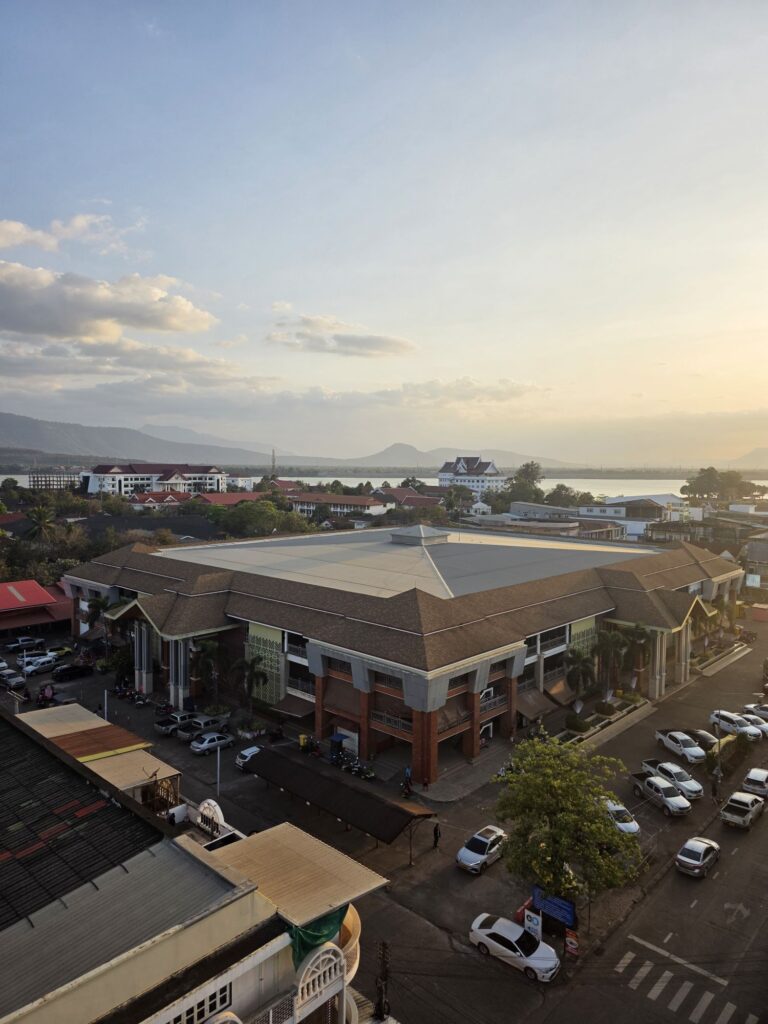
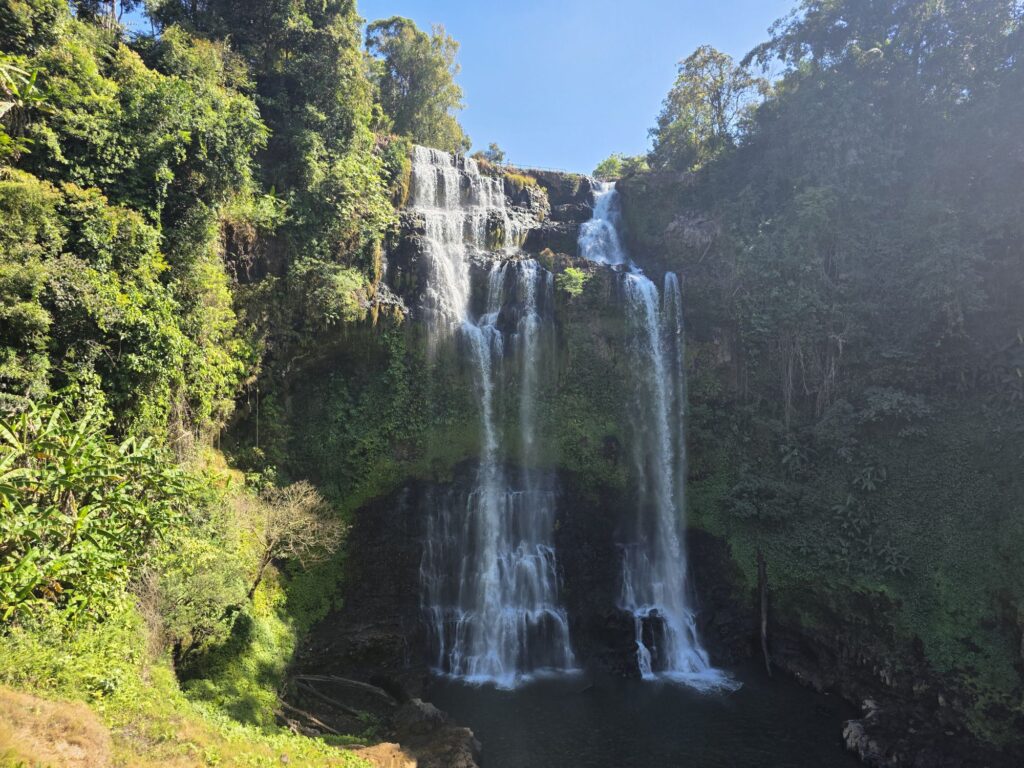
For many, Pakse is the gateway to the Bolaven Plateau, an elevated highland in southern Laos known for coffee, waterfalls, and a pleasantly cooler climate. You can book multi-day tours there. However, one activity in particular was at the forefront for us, namely ziplining over the Tad Fane waterfall.
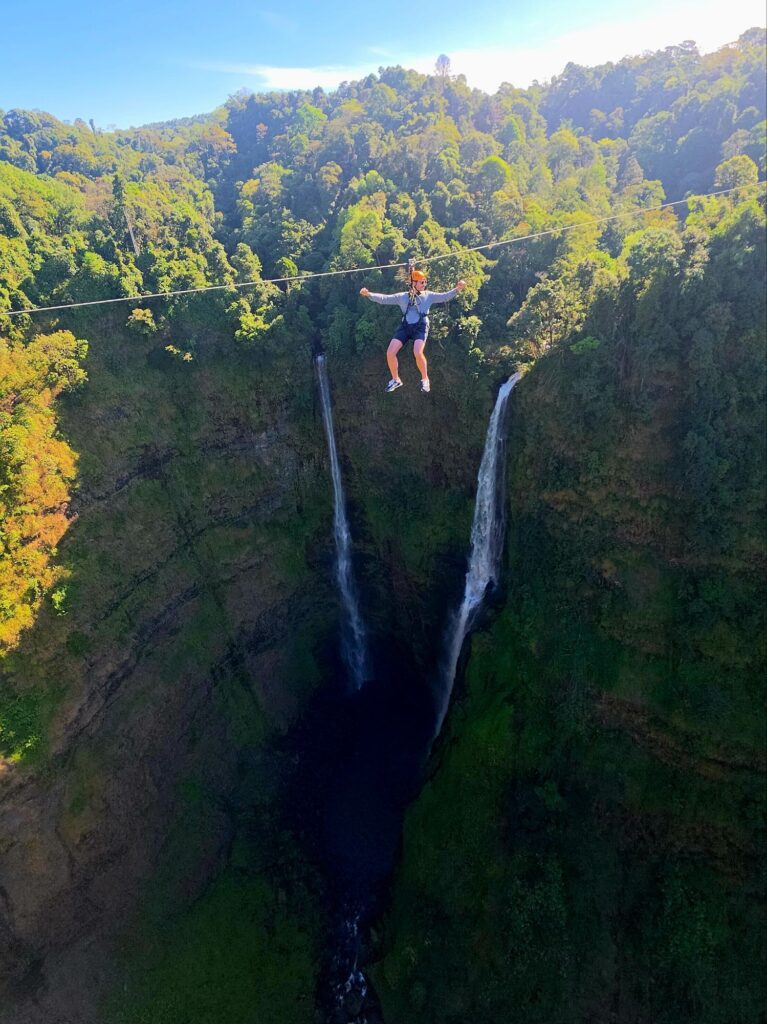
Ziplining is actually an activity that I didn’t have much interest in. Flying over trees on a rope just never appealed to me. However, there are always one or two exceptions. When I saw the videos of ziplining at Tad Fane Waterfall online, I knew I definitely wanted to do it.
Here, you “fly” 30 meters above a waterfall, which also looks spectacular. Admittedly, I was pretty nervous. How safe is such an activity in a country like Laos? But then I remembered that I had already ridden a roller coaster in North Korea. So everything is relative.
A short safety briefing, then a quick weigh-in (limit = 100kg), strap on the ziplining equipment, and off you go. The fun cost $40 plus $8 for an employee to film and take photos from the rope next door.
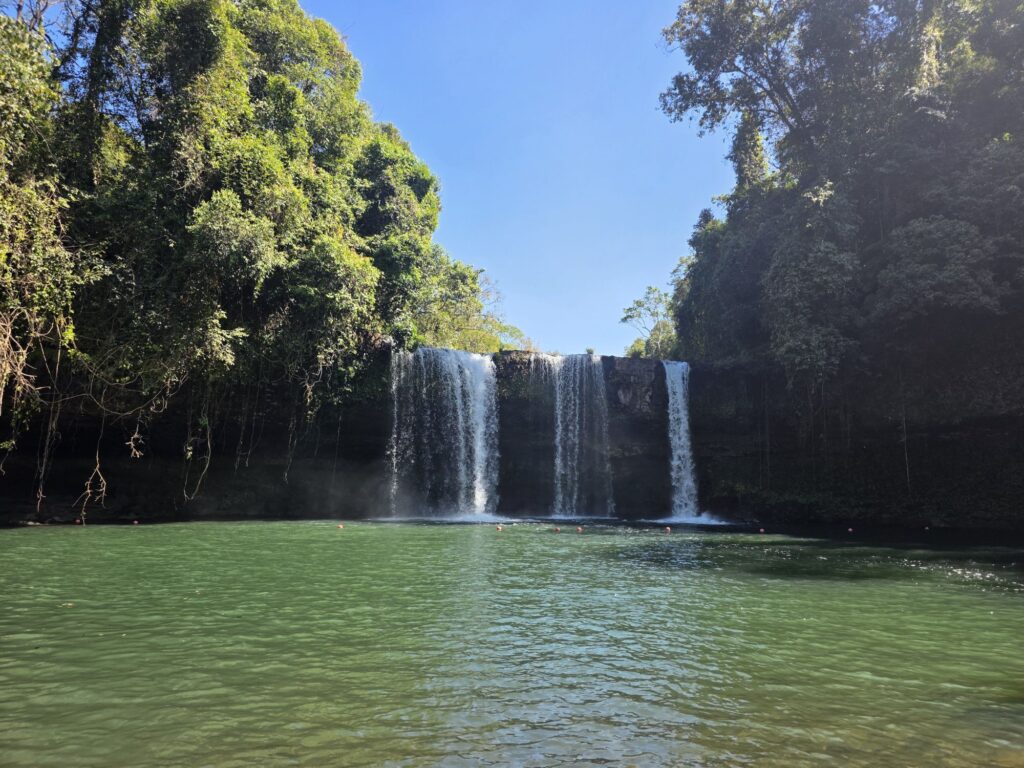
There are other waterfalls in the same area, by the way. We rented a tuk-tuk for the whole morning (not recommended, as it’s cold in the wind and dusty anyway) and then visited Tad Gneuang and Tad Champee Waterfall. All three waterfalls are only a few minutes away from the parking lot and do not require a demanding hike.
Another thing you can do in Pakse is visit the Vat Phou temple, about an hour south of the city. However, as we had already seen a Khmer temple on the overland trip from Thailand, we decided not to go.
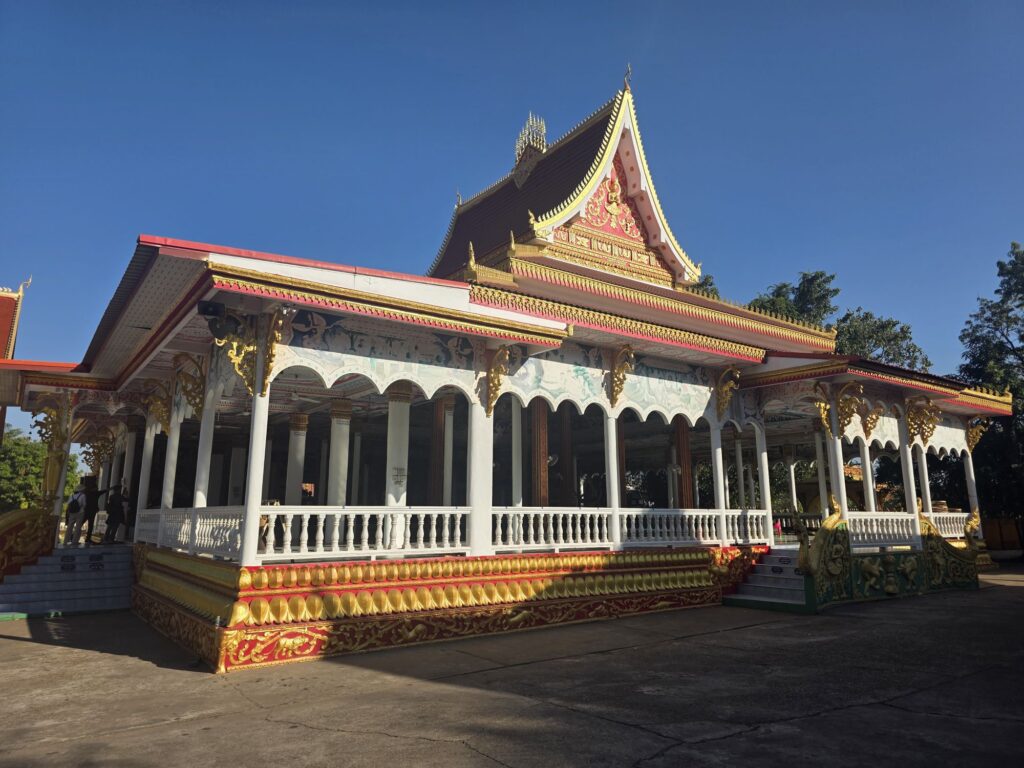
Instead, we drove to Wat Phousalao at sunset. This temple stands on a hill on the other side of the Mekong River that offers a magnificent view of Pakse.
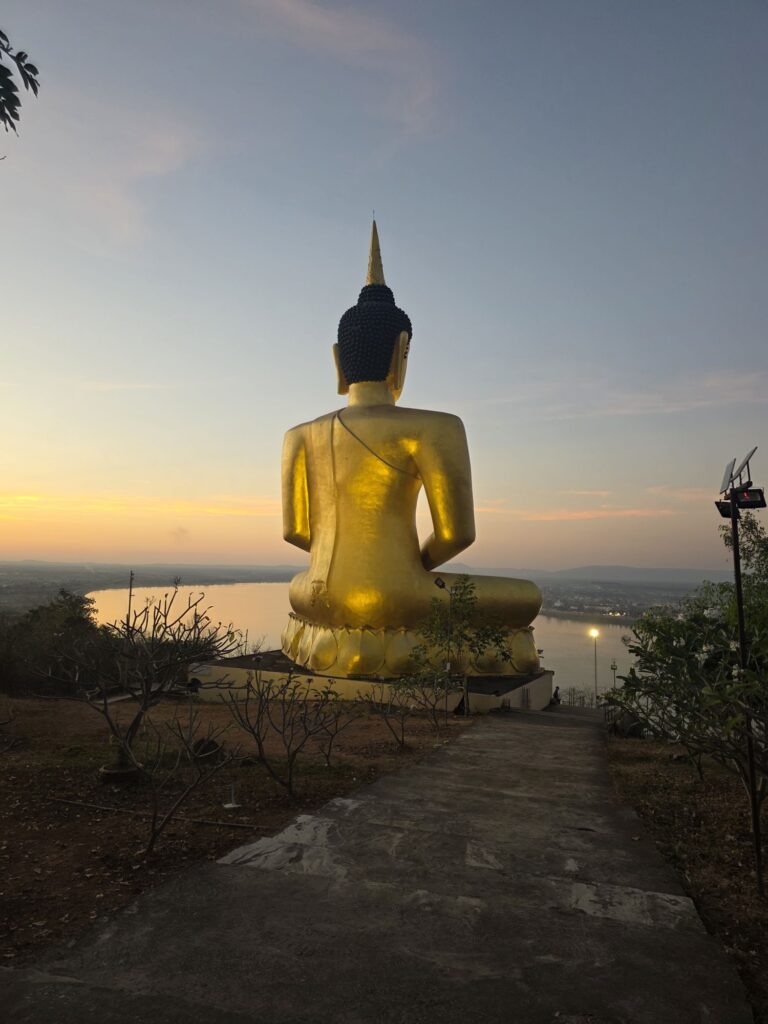
We spent a total of two nights in Pakse, which was just the right amount of time for me. It was cool to see the less touristy side of Laos (if there is such a thing as a truly touristy place in the country). Ziplining over the waterfall was a really awesome activity, but then it was time for us to move on.
Vientiane
After visiting Laos’ capital in 2012, I labelled it as the most boring capital city in the world. At the time, Laos was my country 19/197 and had to compete with Singapore, London, Bangkok, Tokyo, and so on. In the meantime, however, I have visited another 178 capitals. So let’s see how Vientiane ranks in 2026.
The Lao Airlines flight from Pakse to Vientiane took an hour and was on time. The price for this flight was a bit more than €100. We landed in the capital late in the morning, so we had the rest of the day to see the city.
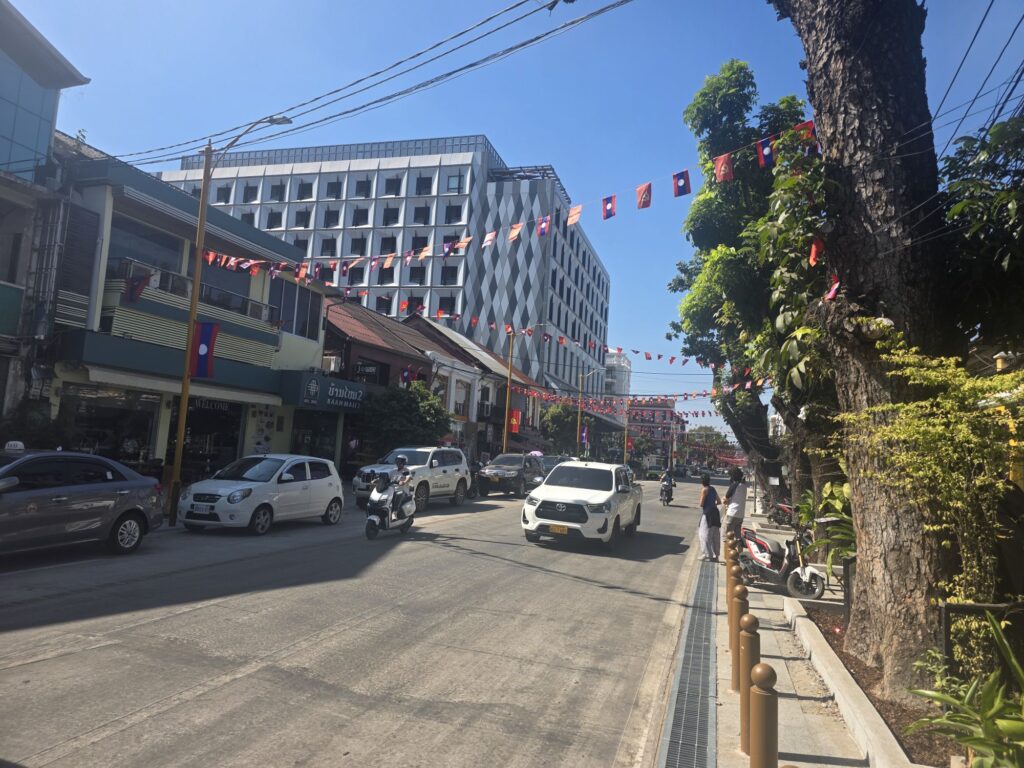
Since my first visit, I had remembered Vientiane as more of a large village than a real city. Thirteen years later, I was surprised to find that the city did not match my memory. This means that either my impression was wrong or a lot has happened in the meantime. In 2026, I found Vientiane to be much more developed than it was back then.
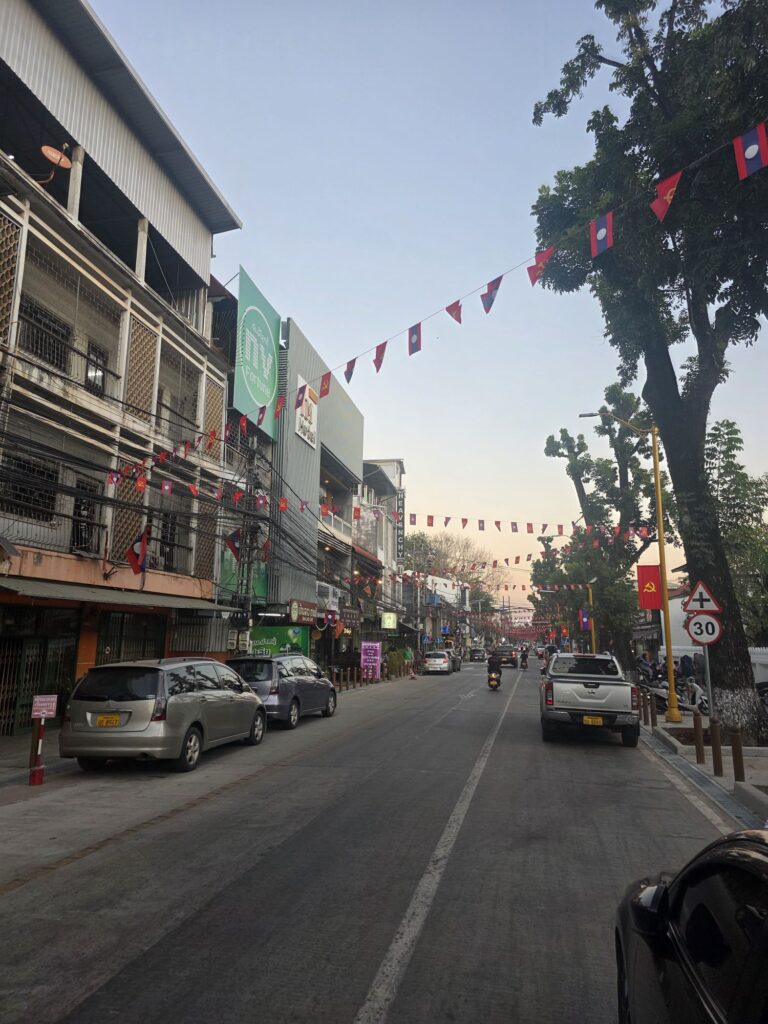
Perhaps I should mention that on my first visit, I experienced the Laotian capital after partying all night in Kuala Lumpur and only slept four hours on my flight to Vientiane. So my judgment may not have been the best.
But this time, I found Vientiane to be a nice, vibrant city with many cafes and good restaurants. In addition, the infrastructure was significantly better than I remembered. To me, Vientiane today seemed like I remembered Phnom Penh, the capital of Cambodia. However, a friend who had just come back from Cambodia told me that Phnom Penh was much more modern.
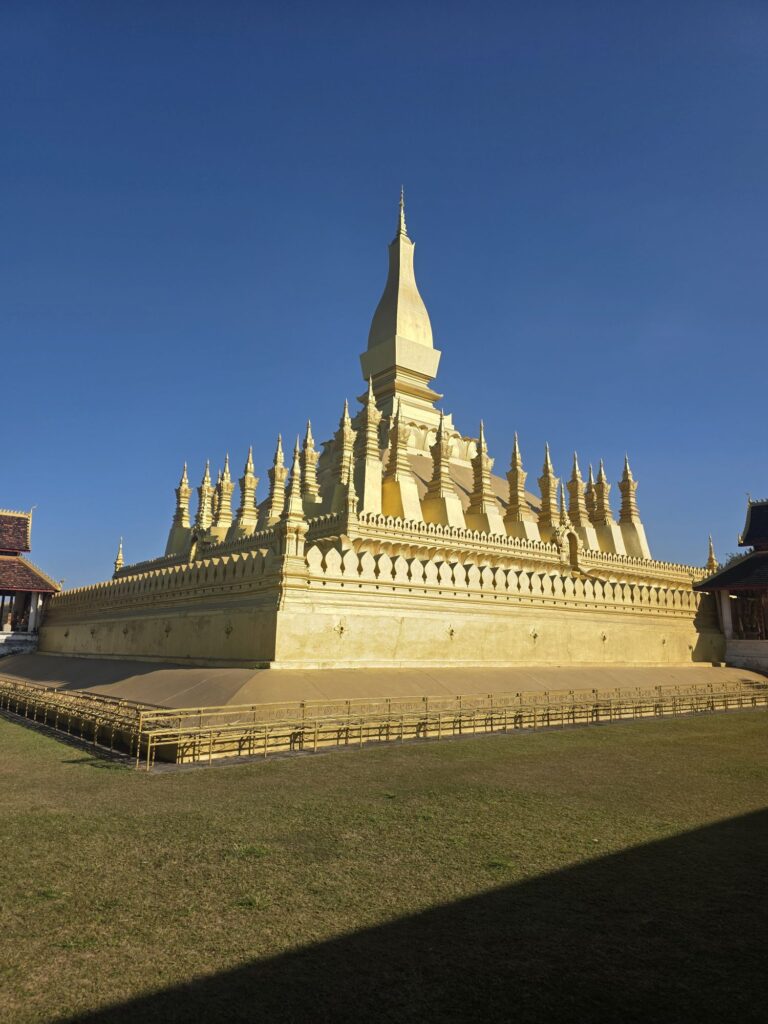
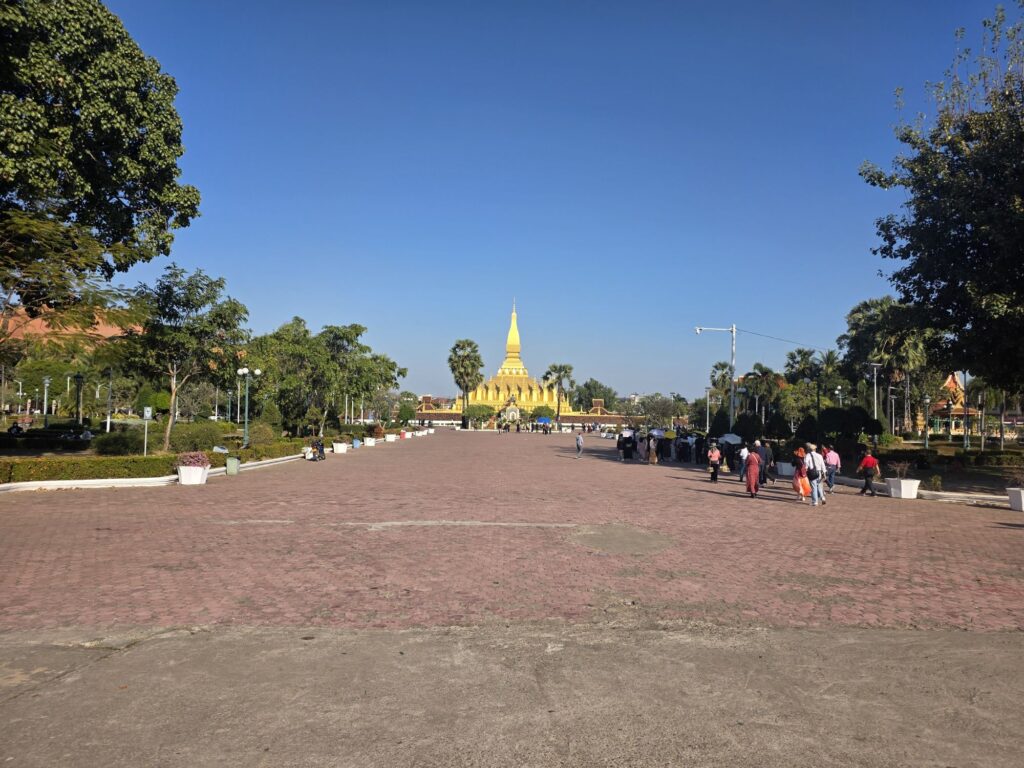
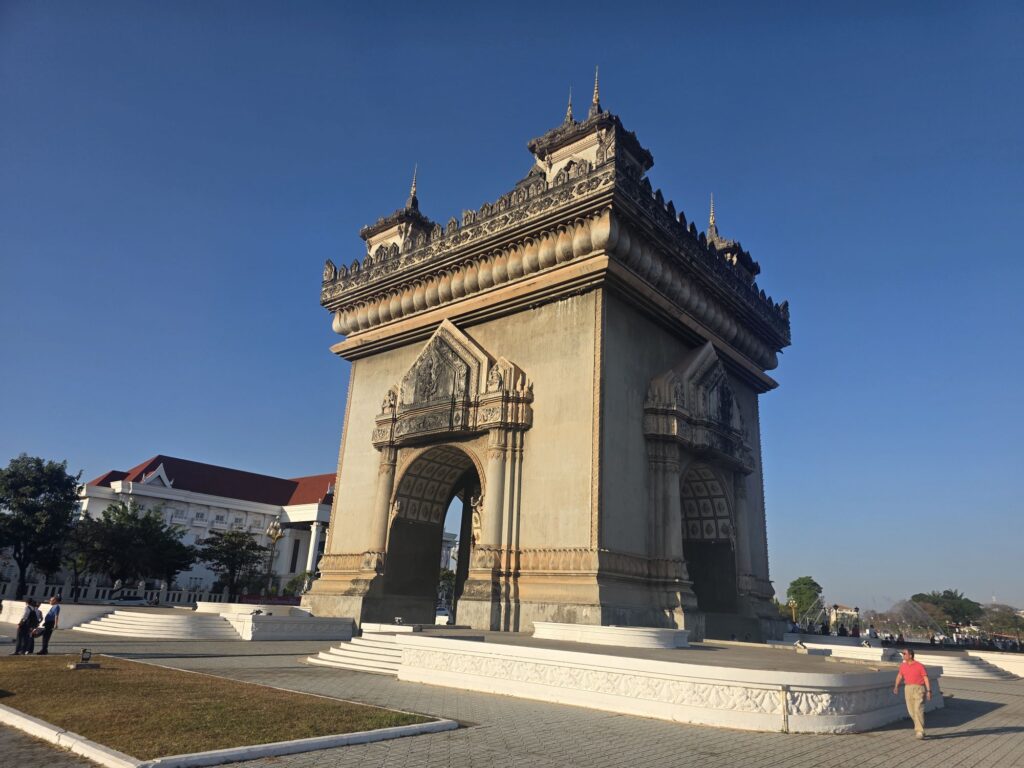
When it comes to sightseeing, I would still describe Vientiane as negligible. There are a few things worth seeing in the capital, but you can easily see them all in half a day. We visited Wat Sisaket, Pha That Luang Vientiane, and Patuxai, the Laotian Arc de Triomphe, with Pha That Luang Vientiane, the country’s most important temple, standing out in particular.
In the evening, there are night markets and a few bars in Vientiane. But the nightlife, as in the rest of the country, is not really worth mentioning.
However, my impression of Vientiane in 2026 was no longer as negative as it had been at first glance. Although Vientiane is still one of the less interesting capitals in the region, it is worth spending a day there. Most travelers either enter or leave the country via Vientiane anyway
Getting around in Laos
From Vientiane, we continued on to Vang Vieng. But before I get to that place, here’s a brief side note about traveling in Laos. If I had to name one thing I didn’t like about Laos on my first trip, it would be traveling between places.
At that time, people mainly traveled between cities in minibuses. That meant spending hours crammed into a 16-seater on terrible, winding roads. It took about 2-3 hours from Vientiane to Vang Vieng and about four hours from Vang Vieng to Luang Prabang.
In this regard, Laos has since received a huge upgrade! In 2021, the Chinese opened the LCR (Laos-China Railway), a high-speed train that runs from China to Laos, connecting Vientiane, Vang Vieng, and Luang Prabang. Instead of minibus rides lasting several hours, it now takes just one hour to get from one place to another.
The trains are state-of-the-art and comparable in comfort to those in Europe (simply clean). They usually run on time and the stations resemble airport gates.
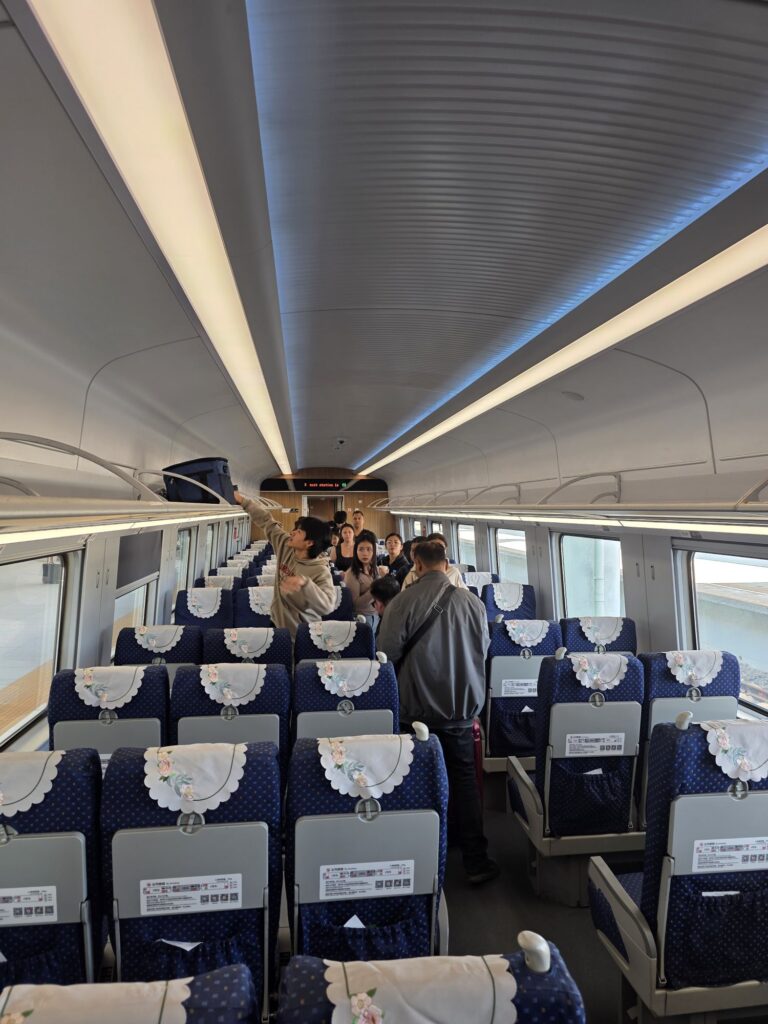
The only thing that is a little tedious is purchasing tickets, as this is only possible three days before departure via the LCR Ticket app. Tickets sell out relatively quickly, so it’s definitely worth booking three days before departure. When we booked our trip from Vang Vieng to Luang Prabang, the train at noon was already fully booked, so we had to take the next one two hours later. And that was even though we booked at 8 a.m.
Nevertheless, this mode of transportation is the best thing that could have happened to travelers. Because it eliminates the only thing that was really crappy back then.
Vang Vieng
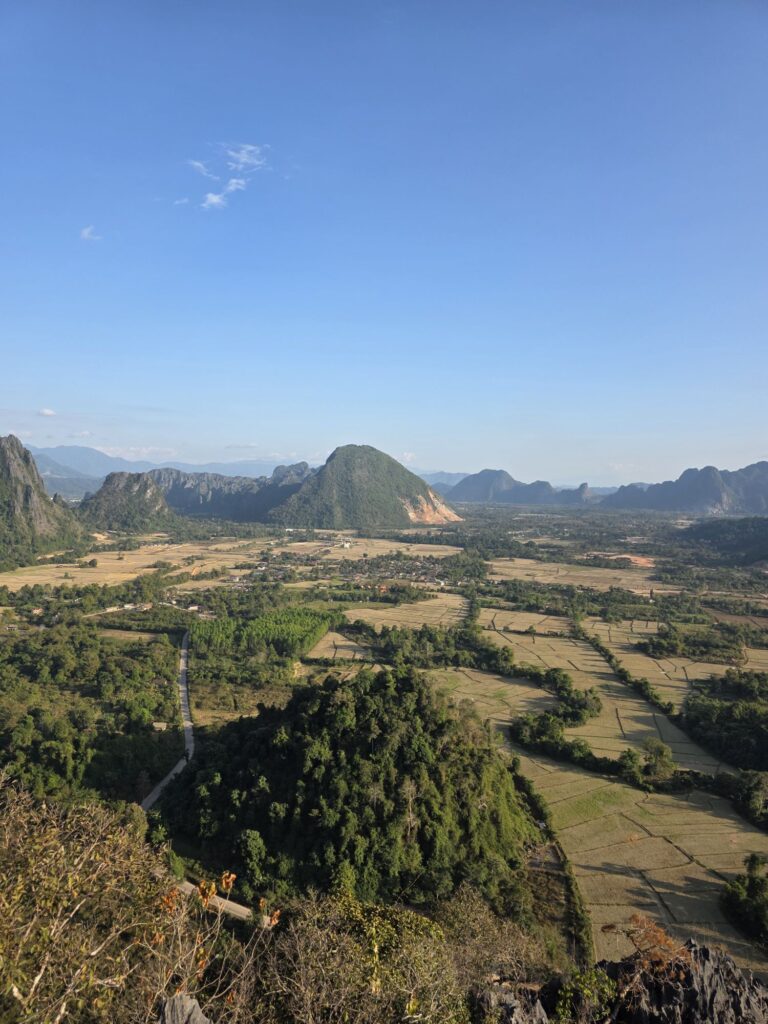
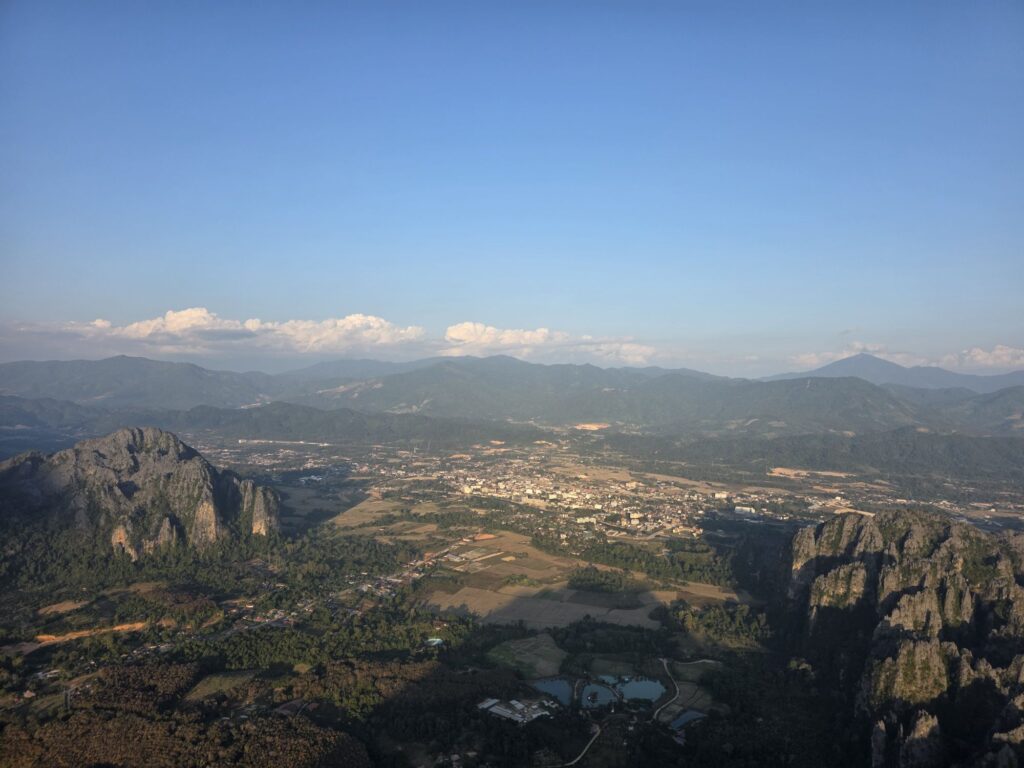
Vang Vieng is a small village surrounded by dramatic limestone cliffs and rivers that are almost too beautiful for the place itself. Here, the focus is on nature, outdoor activities, and scenic viewpoints. You could almost call the town the adventure capital of Southeast Asia.
Things used to be a little different. In 2010-2011, Vang Vieng was known as the village of zombies because it was notorious for its extreme party tourism. Backpackers paddled down the Nam Song River, got drunk, and consumed drugs such as cannabis, mushrooms, and others while visiting the river bars on inflatable tubes (“tubing”).
The risky activities regularly led to accidents: cliff jumping, tubing, and alcohol consumption caused numerous injuries and deaths. At some point, Vang Vieng was increasingly in the negative headlines of the international press, so the government, which had previously turned a blind eye for the sake of tourism, intervened and put an end to it all.
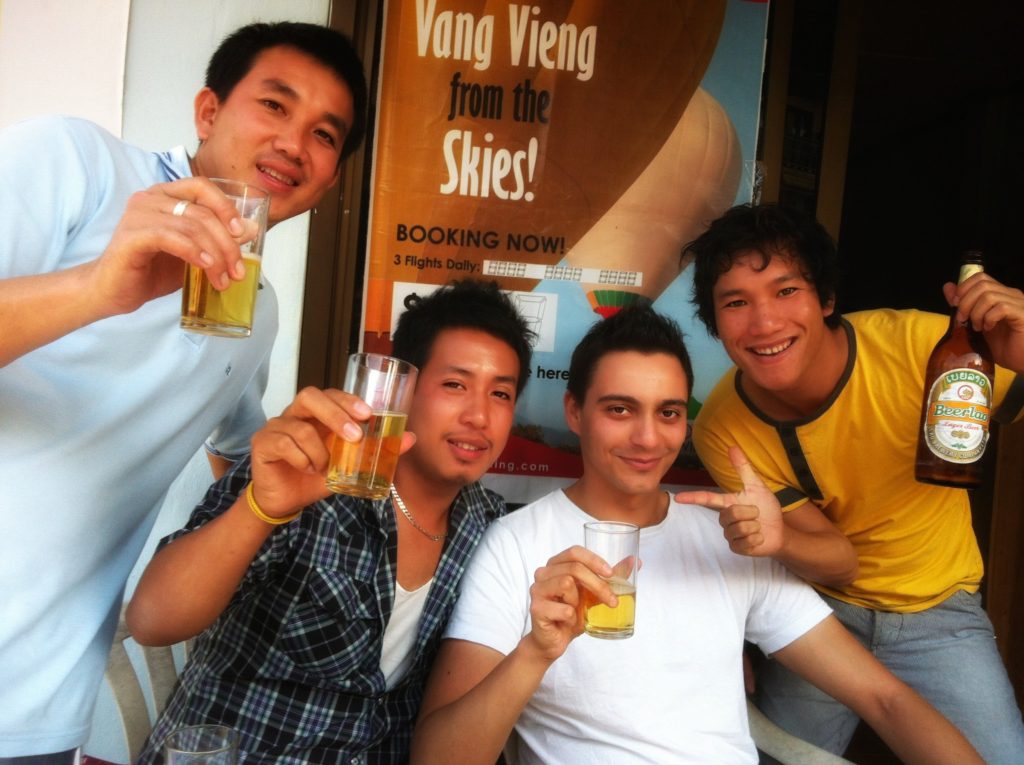
When I was in Vang Vieng in 2012, the wild times were already over. Vang Vieng was once again a sleepy little village that focused primarily on outdoor tourism. The locals told me at the time that they missed the excessive times because tourism had collapsed by 60-70% since then…
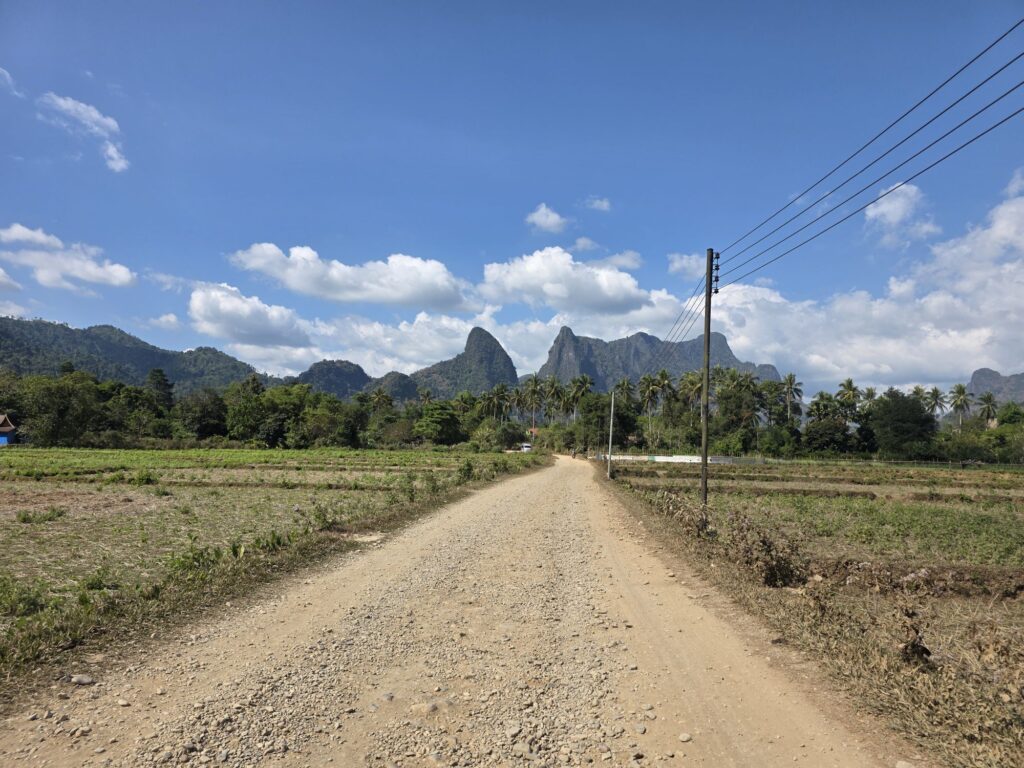
Let’s fast forward 13 years to January 2026. To me, Vang Vieng looked exactly the same as it did back then. The village itself is nothing special, consisting mainly of a main street and a few side streets. The real highlight, however, is the surrounding nature.
We spent the two days doing the following: paramotor flying, a buggy tour to the numerous lagoons, and a hike to the Nam Xay Viewpoint.
Originally, we wanted to take a hot air balloon ride here, but after seeing the paramotors, we switched to this activity. This is a kind of go-kart attached to a paraglider, which allows you to fly through the air with a local pilot.
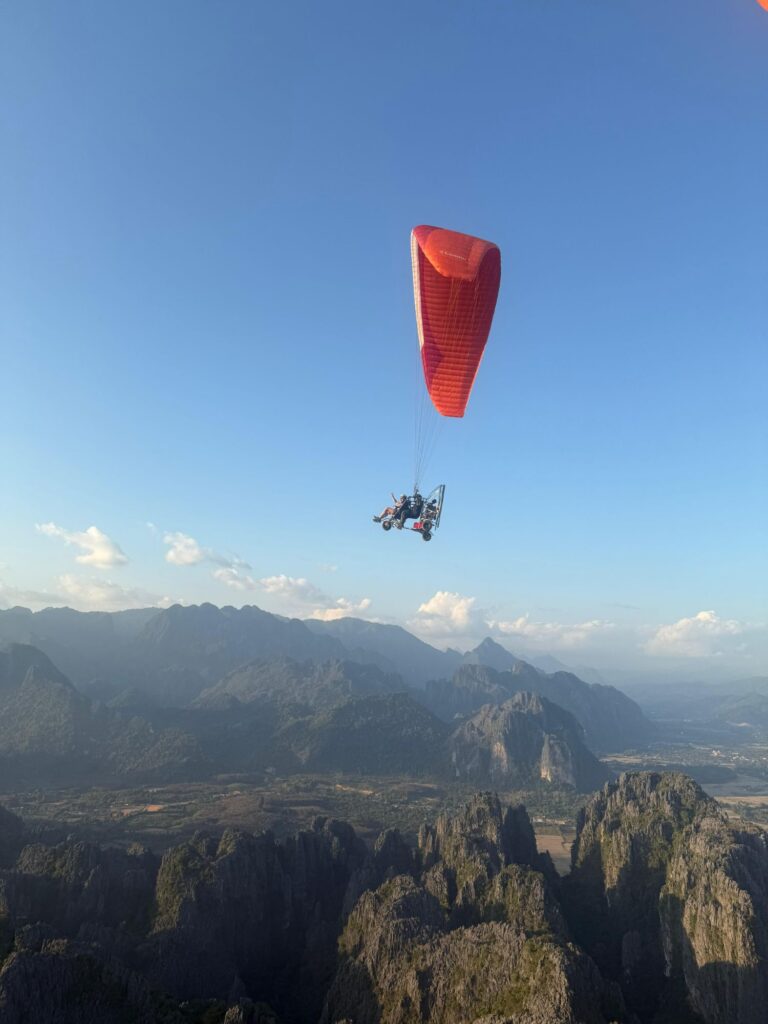
Here too, there’s a queasy feeling, but you can see the sky filled with balloons and paramotors the whole time, which certainly helps to calm your nerves a little.
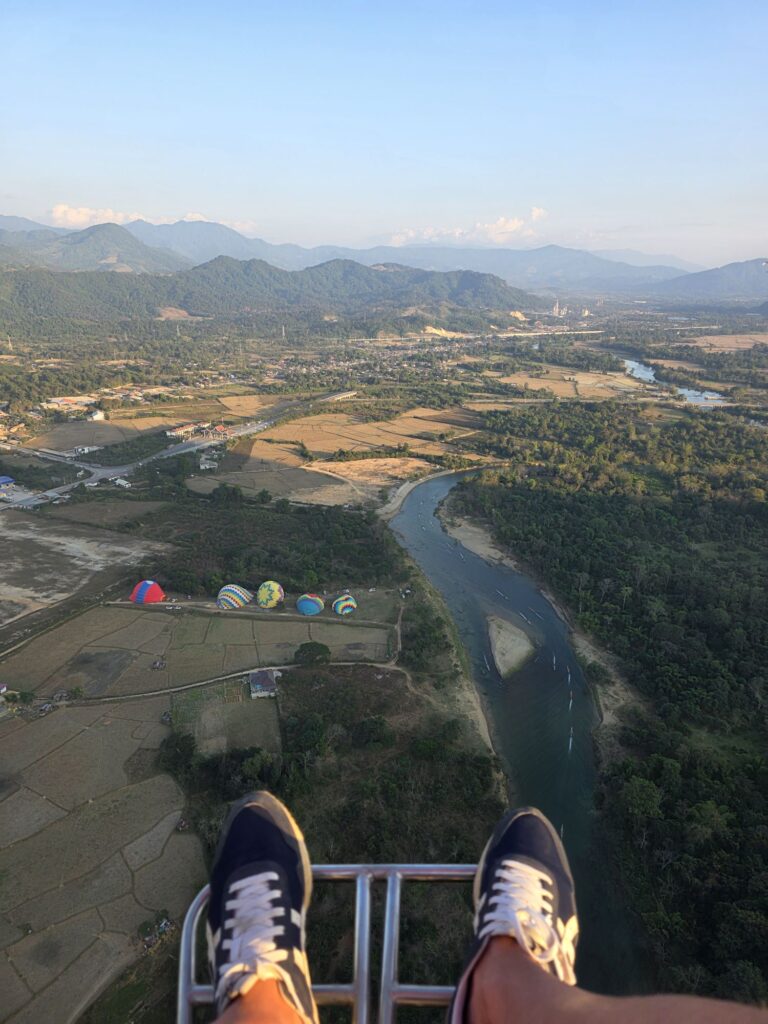
And so you glide through the air – either at sunrise or sunset – and marvel at Vang Vieng’s nature from above. An incredible sight, which is even more impressive from this perspective than from below.
The flight lasts about 30 minutes and costs €60 (or $60, I can’t remember exactly). It’s a really cool experience, one of the best I’ve ever had on my travels. You fly a little higher in a balloon, but the experience in a paramotor is definitely cooler (I say this having already been on a few balloon rides).
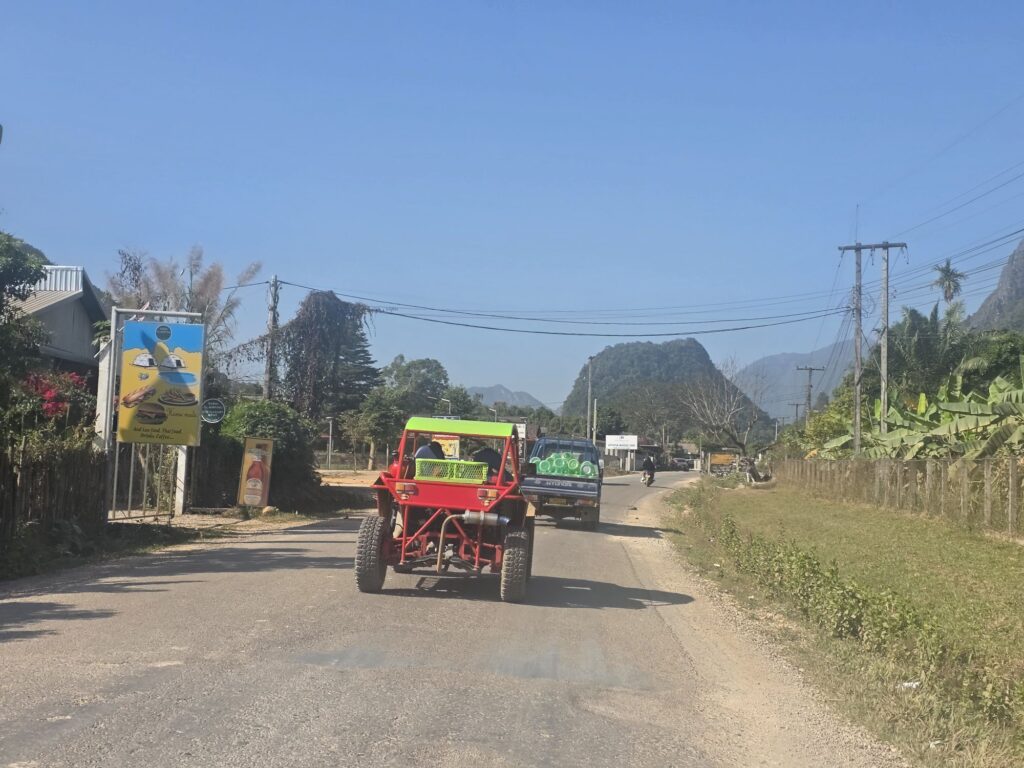
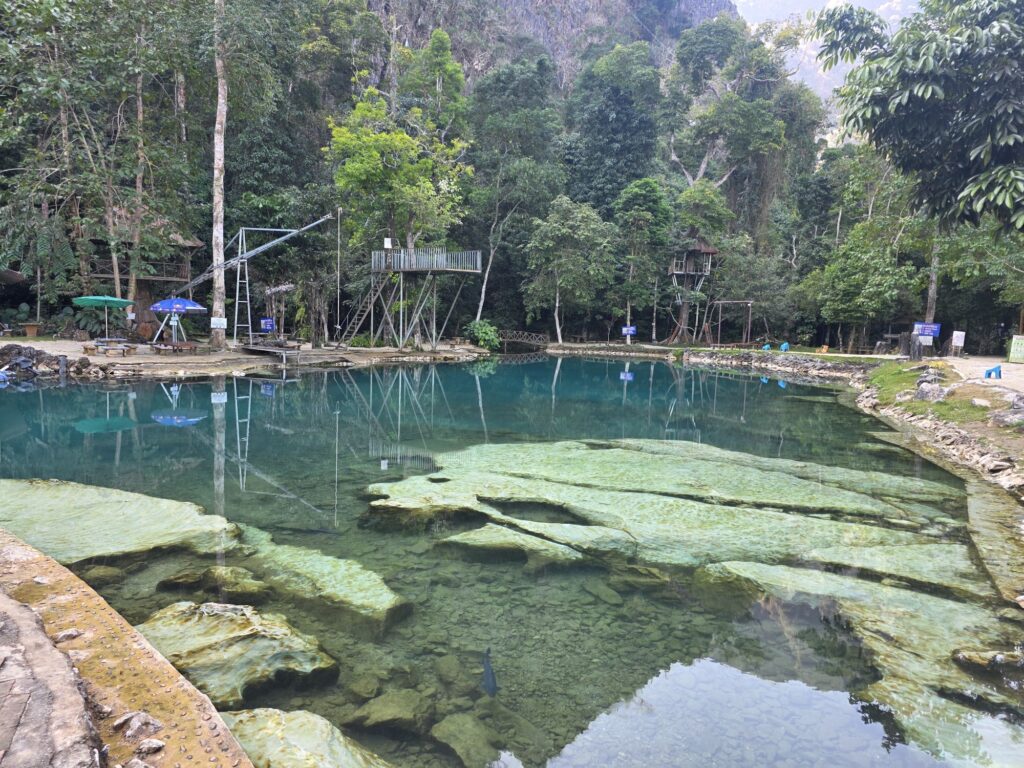
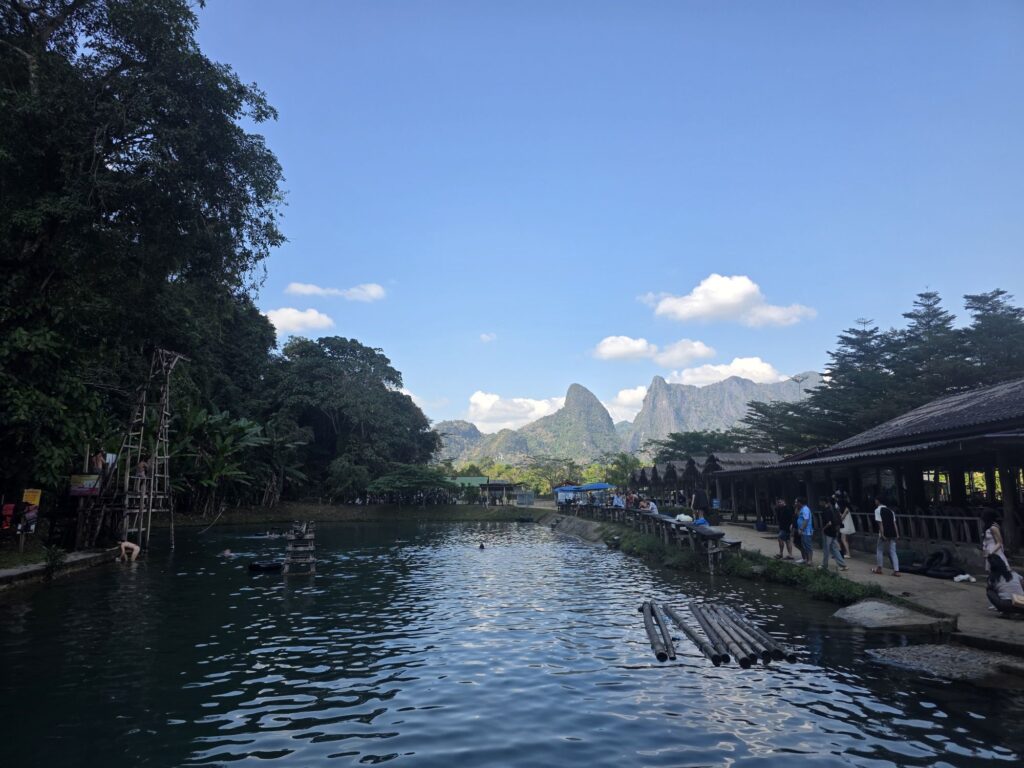
The buggy ride the next day was also cool, simply because it allows you to explore the area on your own. As mentioned, we drove to three lagoons, none of which I found particularly exciting.
What was all the more impressive, however, was the Nam Xay Viewpoint. This is where the now most famous photo of Laos is taken, sitting on a motorcycle with a Laotian flag at the edge of a cliff. This viewpoint is something that didn’t exist on my first trip.
Of course, the rock was already there. But back then, climbing it wasn’t an activity. There were no hiking trails like there are today, which consist mostly of improvised stairs and rocks that are relatively easy to climb. And the motorcycle came up there sometime in 2016 or 2017.
It takes about 30 minutes to climb the hill, which should be easy for anyone with a moderate level of fitness. A little tip: we went up at sunset. But I would say that the better time is probably sunrise or the early morning hours. There are two viewpoints at the top with motorcycles, and at the better of the two, the sun sets diagonally behind them. This means you have a bit of backlighting for good photos.
After that, our time in Vang Vieng was already over. We could have stayed another day and done activities like tubing, cave visits, or hot air ballooning. I already did tubing and caves on my first trip, so there was no real need to repeat them. But in the end, you can’t do everything.
Nevertheless, Vang Vieng remains the jewel of Laos in terms of tourism for me. The nature around this village is simply unbeatable, so Vang Vieng should not be missing from any itinerary. Incidentally, I would have expected it to be significantly more touristy here than in 2012, but that wasn’t really the case.
Luang Prabang
Of the three places I visited on my first trip, Luang Prabang was the one I remembered the least. I had absolutely no idea what the city looked like anymore.
We spent the last two days there, or one and a half to be precise. The first day involved arriving in the late afternoon, exploring the area a little, and then having dinner in the historic district.
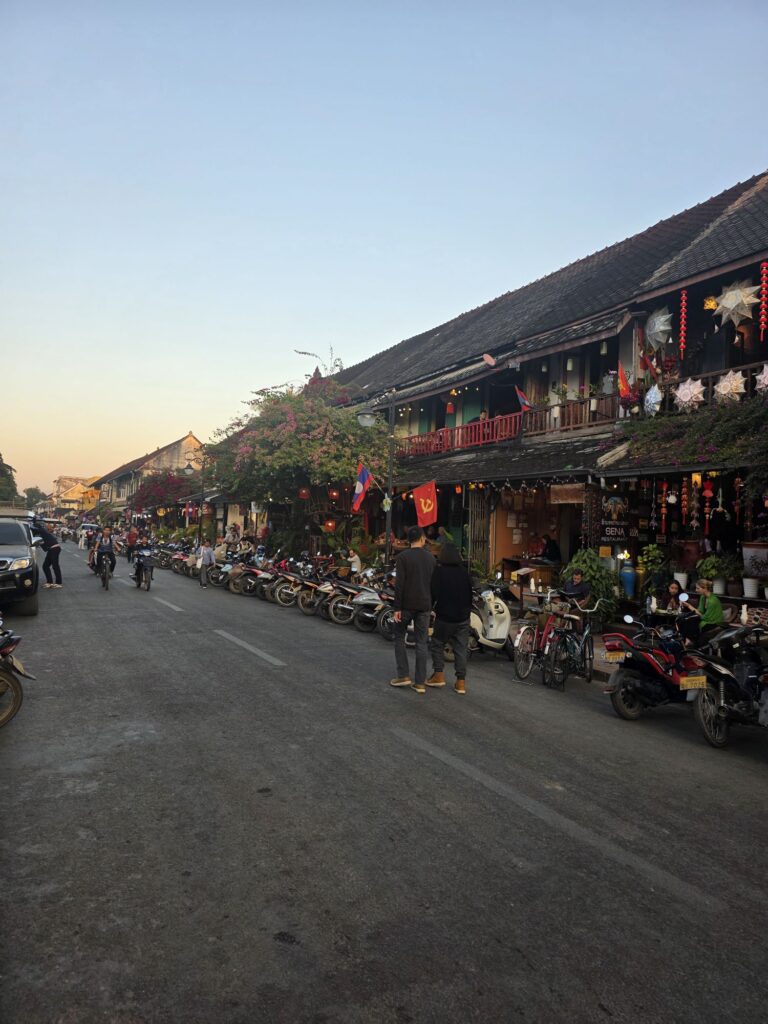
What struck me was that Luang Prabang was freezing cold at night! Vang Vieng already had nighttime temperatures somewhere around 15°C, but here they dropped to 8°C. Winter in Southeast Asia, where the weather is usually mild and pleasant, sometimes includes such cool nights.
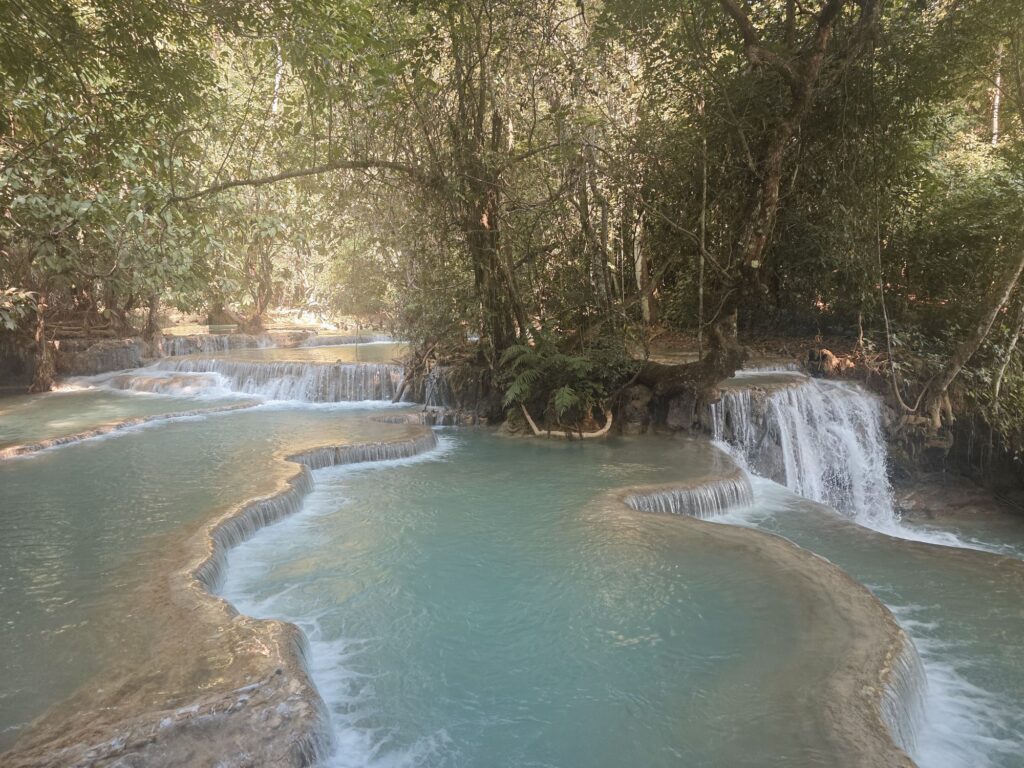
The main activity didn’t happen until the next day, namely the Kuang Si Waterfalls, probably the most famous in the country. These waterfalls are located about an hour outside of Luang Prabang.
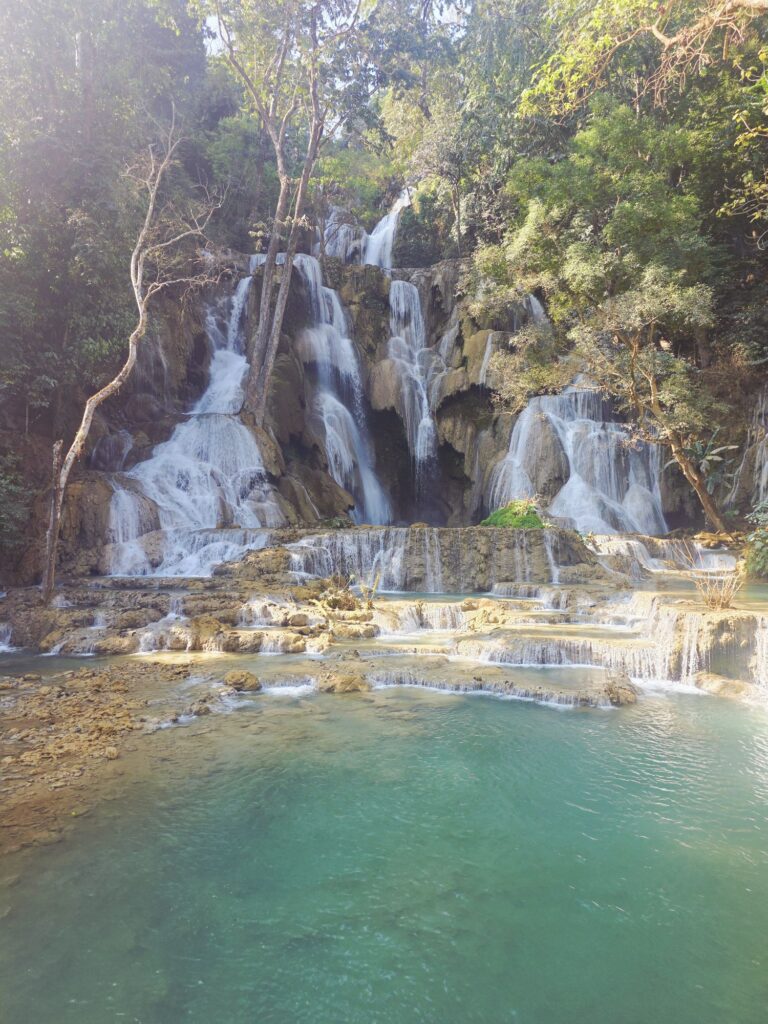
We arrived there at around 10 a.m. and there were already a lot of people. The waterfalls are certainly beautiful, but due to the large crowds, it was my least favorite place in all of Laos. I still recommend visiting this place, but just be there at 8 a.m. to fully enjoy it.
At least in 2012, it was allowed to swim in the waterfalls, which is now prohibited. So today, you can at least take pictures of the waterfalls without other tourists ruining the shot.
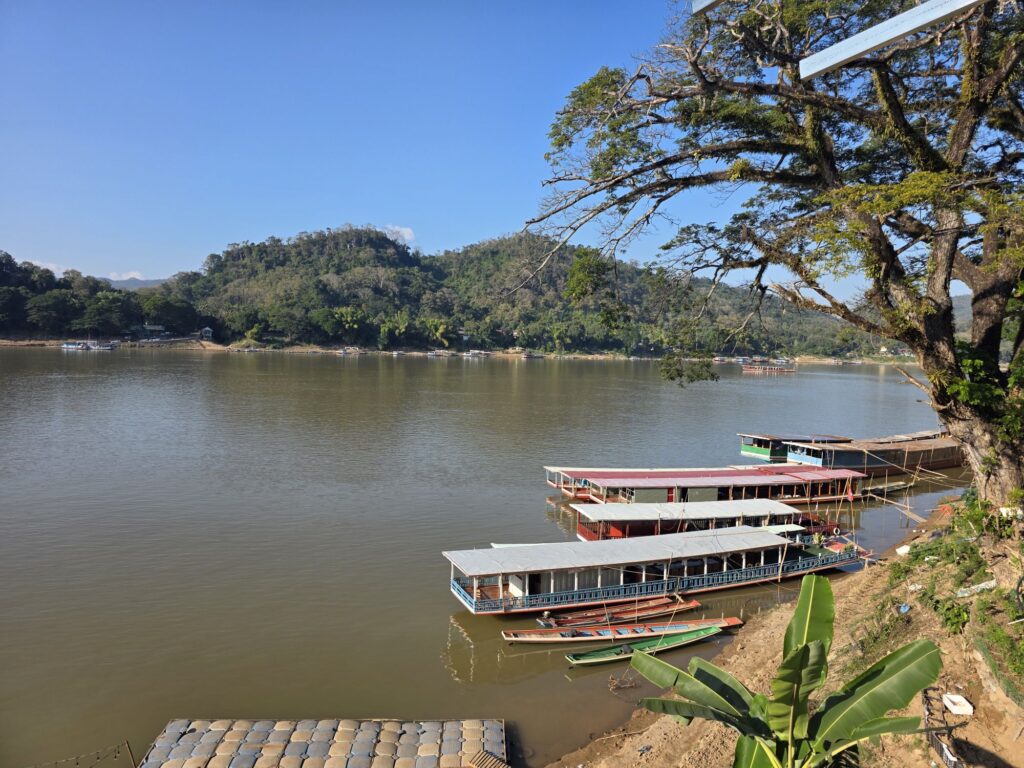
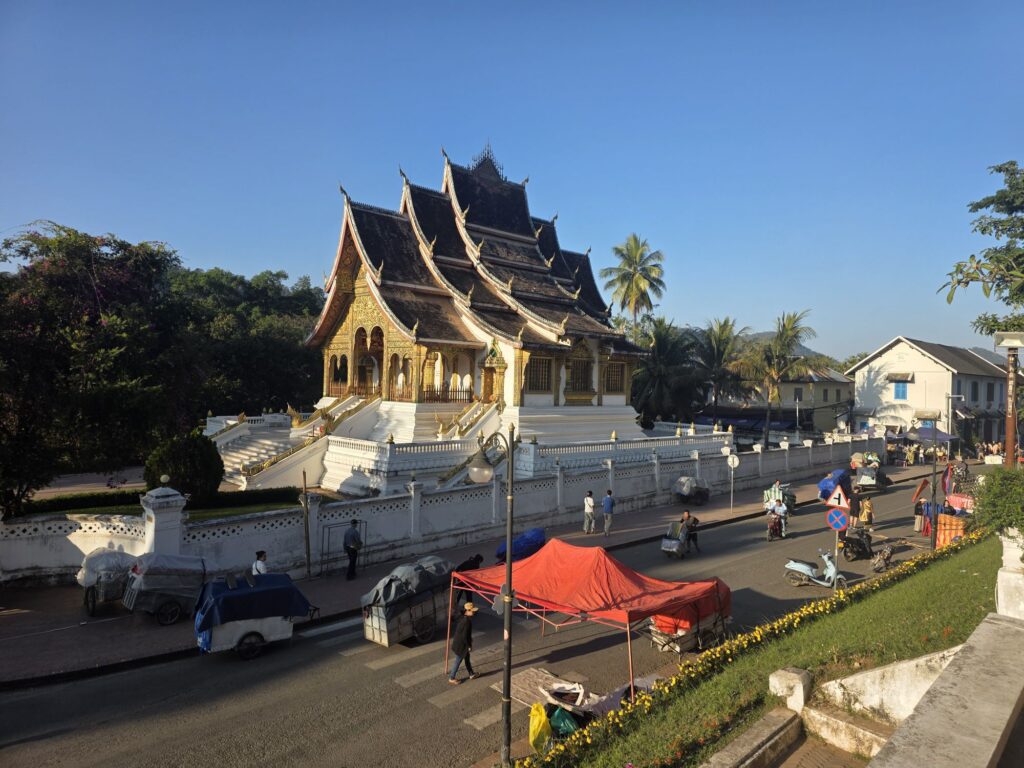
We spent the afternoon in the historic district of the city. Luang Prabang is certainly the more beautiful city in compraison to Vientiane and Pakse. There are still a few temples to visit in the city itself, but we didn’t feel like it anymore and climbed Phousi Hill to watch the sunset.
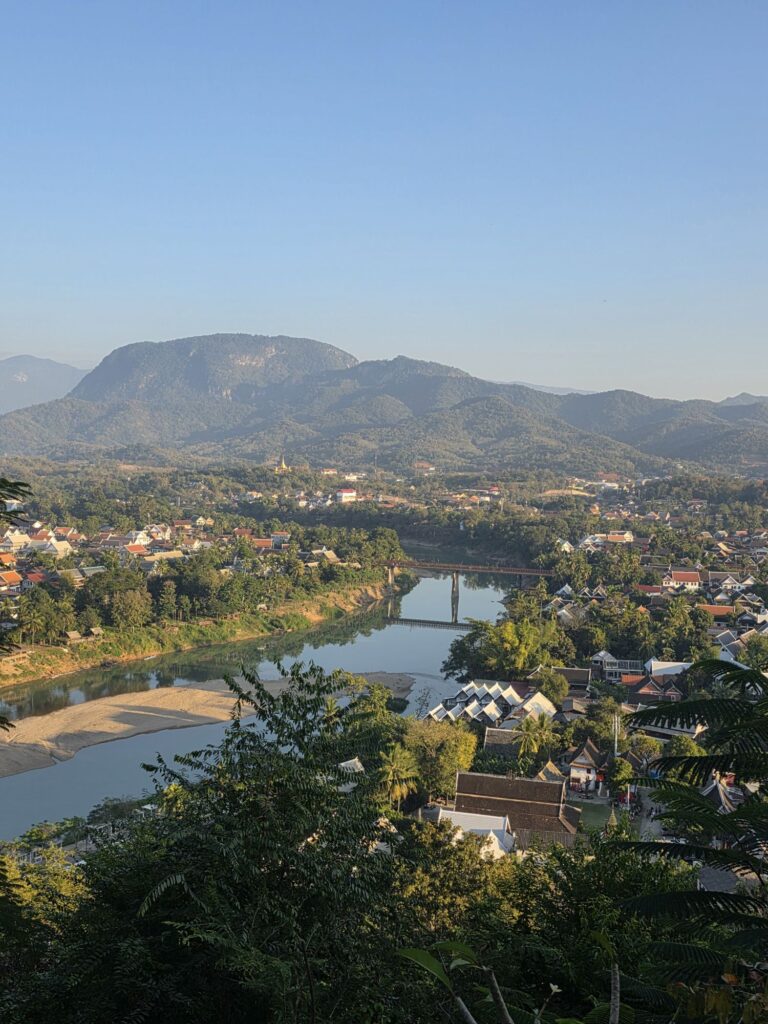
That was our last activity in Laos. After seven days, we left the country by plane and headed back to Thailand. After seven days with many positive impressions, we were ready to leave the country again.
Laos 2012 vs. 2026
So, let’s get to the crucial question: how has Laos changed since my first trip?
Surprisingly, I have to say: relatively little. Laos is still a quiet, laid-back country where time seems to pass more slowly than in Thailand, for example. Compared to 2012, the number of tourists has increased by about a third, from around 3.3 to 4.4 million. However, you don’t notice this particularly much. There are significantly more Chinese tourists today, which is not surprising given the new railway.
So, in fact, the high-speed train is the only really big change I noticed. Other things are just nuances. I was pleased to realize this. Changes in tourism don’t always have to be positive. In fact, they rarely are.
Laos thus remains a country that flies a little under the radar, which is also due to the strong competition next door. In addition to the significantly lower number of tourists, you are also rewarded with incredibly beautiful nature and lots of cool activities.
Furthermore, Laos is still one of the cheapest countries in the world, as it was in 2012. Once, the three of us went out for lunch in Vang Vieng. For two starters, three main courses (all of which were excellent) and three drinks, we paid less than 11 euros. Not per person, but for all of us together.
Otherwise, as one of five communist countries, Laos also has its peculiarities. Communist in Laos does not mean that it is a planned economy, but it is a one-party government, opposition is banned, and any criticism of politics is prohibited.
We noticed this communist influence, for example, when it was suddenly announced at midnight in Vang Vieng that the government had banned all forms of nightlife after midnight. Starting this week. No reasons were given. Such arbitrary things happen, just like the 7-Eleven stores, whose shelves are usually only about half full. You have to take things like that with a sense of humor.
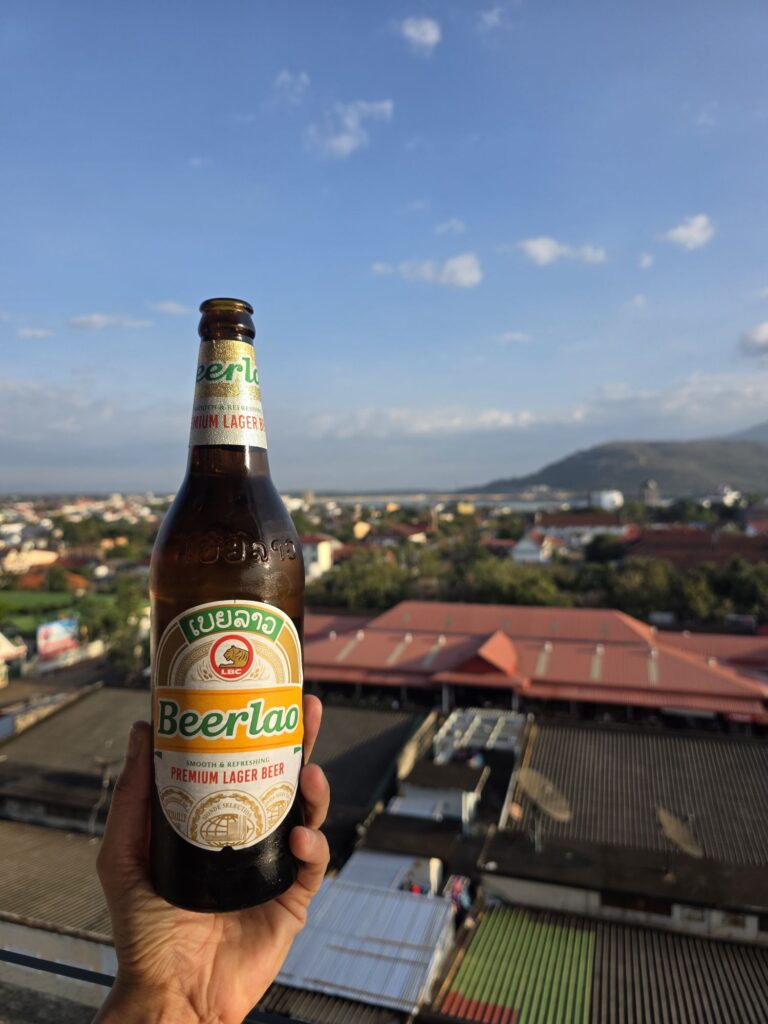
And last but not least: the food. On my first visit, I found Laotian food uninteresting, especially compared to Thai or Vietnamese cuisine. 13 years later, I thought that Laos was very much oriented towards Thai cuisine. In some places, pad Thai was simply sold as pad lao, but it was ultimately the same thing. Pad kra pao was also sold practically everywhere. These dishes were almost more common than larb, the Lao minced meat salad.
To sum up: Laos is still a great travel destination, offering a good mix of fantastic nature, exciting activities, and (now) good cuisine. And all this at practically unbeatable prices. It’s unlikely that I’ll go to Laos a third time, but I enjoyed this second trip just as much as the first.
Click here to find the trip reports of all 197 countries I have visited!
So happy to see that you are continuing blogging about your adventures even though you’ve “finished” your 197 travels….
I visited Laos three times while living in Asia, including the year 2000 when Laos had just opened up to tourism and it remains one of my favorite countries in SE Asia. I’m shocked that you can’t swim in the Kuang Si Waterfalls anymore! That was the highlight of Luang Prabang for me….
Your blog made me want to go back to Laos for trip #4….although not until I get a bit further along on my own list….(Now at #105). Safe travels!